“How do I know if what we’re doing is actually helping?”
When behaviors are the only thing we measure, it’s easy to miss the quieter, foundational changes happening underneath the surface.
Healing starts inside the body first—before it shows up outwardly in communication, learning, or behavior.
Here are five signs your child’s body may be healing, even if it doesn’t look dramatic yet.
1. Changes in Sleep Patterns
Sleep is one of the first systems to shift when the nervous system begins to regulate.
You may notice:
- Falling asleep faster
- Waking more frequently for a period
- Shorter naps or deeper nighttime sleep
- Temporary sleep disruptions followed by improvement
These changes can be the body recalibrating circadian rhythms and neurological signaling. While sleep shifts can feel frustrating, they often precede cognitive and emotional gains.
2. Digestive Shifts (Yes, Even the Messy Ones)
The gut plays a central role in immune function, detoxification, and neurological health.
Signs of healing can include:
- Changes in stool frequency or texture
- Increased gas or bowel movements
- Improved appetite or food tolerance over time
- Temporary digestive discomfort as toxins are released
While these changes aren’t always pleasant, they often indicate that the body is activating elimination pathways—a foundational step in healing.
3. Increased Emotional Expression
As awareness increases, emotions often follow.
Children may:
- Cry more easily
- Show frustration or excitement more clearly
- Seek comfort or connection
- Express preferences more strongly
Rather than regression, this can mean your child feels safe enough in their body to express what’s happening internally.
Emotional expression is a sign of neurological engagement—not loss of progress.
4. Periods of Fatigue Followed by Clarity
Healing requires energy.
It’s common for children to experience:
- Days of lower energy
- Needing more rest
- Followed by moments of increased focus, calm, or connection
This pattern can signal that the body is redirecting resources toward repair and regulation.
5. Subtle Changes in Awareness and Connection
These are the moments parents often feel but can’t always explain.
You might notice:
- Longer moments of eye contact
- Increased curiosity
- More presence or calm in familiar environments
- New interest in people or surroundings
These shifts are often precursors to communication and behavioral change—even if words or skills haven’t caught up yet.
Why These Signs Matter More Than You Think
When parents know what to look for, they’re less likely to stop too soon or assume something isn’t working.
Healing is cumulative.
The foundation must be built before visible change can last.
By recognizing these signs, you give your child’s body the time and consistency it needs to continue moving forward.
Progress Is Happening—Even When It’s Quiet
If you’re seeing one or more of these signs, take a breath.
You’re not imagining it.
You’re not behind.
And your child’s body is responding.
Sometimes the most meaningful changes are the ones happening out of sight.
A Gentle Reminder
You don’t have to navigate this alone, and you don’t have to figure out every step at once.
Education, community, and ongoing support make it easier to trust the process—especially during the quieter phases of healing.
You’re doing important work.
And your consistency matters more than perfection.
Also see related this related podcast,
Why Progress Can Look Uneven in Autism Recovery (and Why That’s Normal) Podcast #239
Free Online Event
The 4 Stage
Autism Recovery Reset
How You, as a Parent, Can Take Action Now
With an A-Z, Step-By-Step Roadmap!
1-HOUR LIVE EVENT + Q&A
THURSDAY, OCTOBER 22ND, AT 5PM PT | 8PM ET

If the time doesn't work for you, sign up anyway, and I'll send you the replay.
After watching my own son transform from struggling with severe symptoms to living a healthy, independent life, I spent years researching, learning, and developing the approach I now teach to families around the world.
In this free live online event, I will teach you what most doctors don’t even know is absolutely necessary to achieve your child’s optimal outcome to ensure their healthiest, happiest, and most fulfilling life.
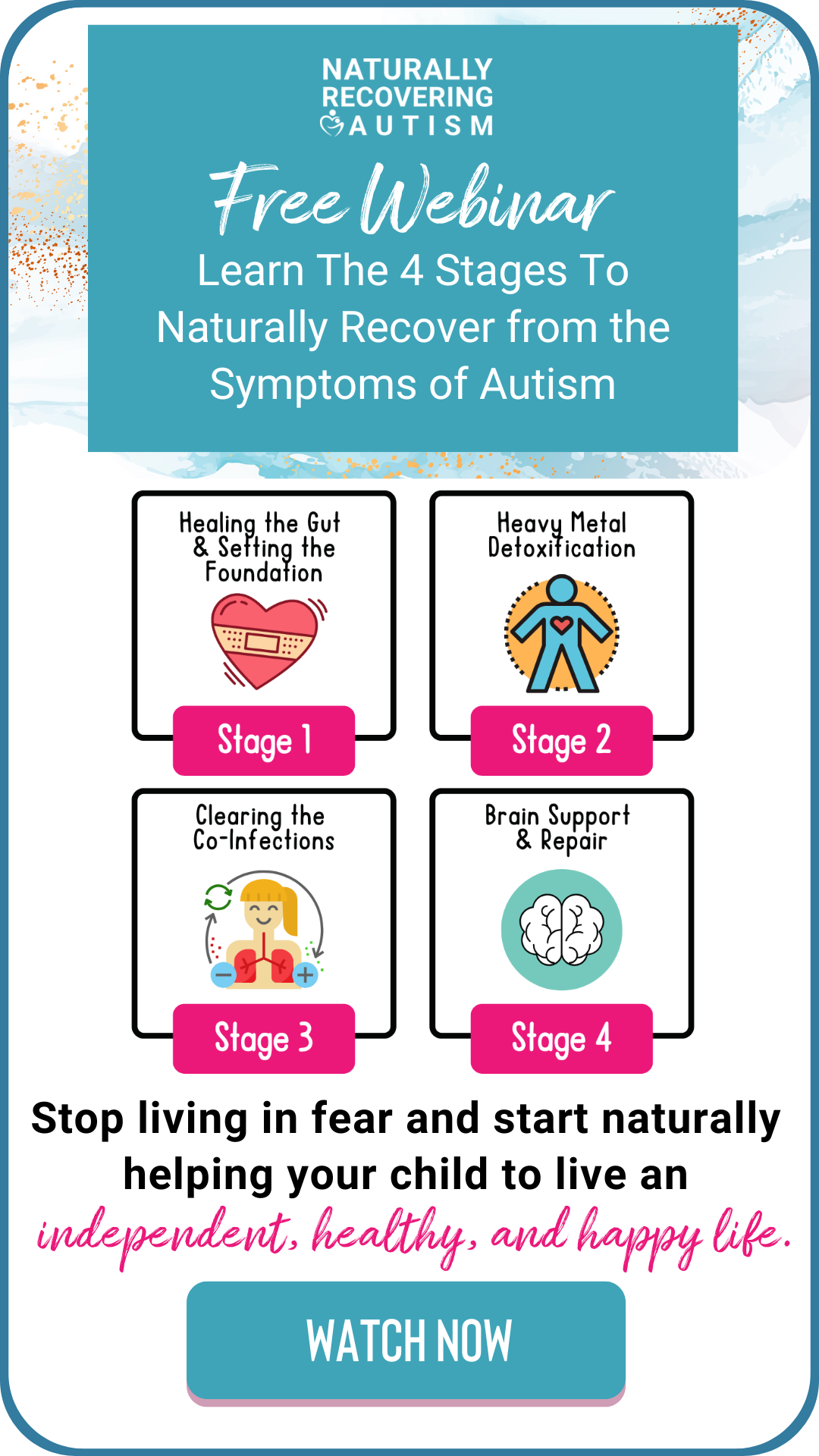
I’ll walk you through the four stages I believe are essential to supporting your child’s health:
- Healing the Gut
- Natural Heavy Metal Detoxification
- Clearing Co-Infections
- Brain Support & Repair
I’ll share what I discovered through my own journey, why I believe the order matters, and how I approach the underlying health challenges that can affect children with autism.
Stop guessing and start understanding the A-Z roadmap I developed through years of research and personal experience.
This is for informational purposes only and is not meant to diagnose or treat. Every child’s level of recovery is different. No two people are the same. It is never implied that all children will have the same outcome. Results are all based on individual biology and the work that is done. This process takes time and various steps, effort and resources need to be weighed. Our programs are intended to help you become more knowledgeable and guide you to help bring your child a better quality of life, whatever that may be. We want to help by giving great content, direction and strategies that move you forward. Nothing on this page or any of our websites is a promise or guarantee of results or future outcomes. The results on this page and any of our websites are not typical or promised. In fact, there will be people who purchase this and other programs and never put the work into implementing the strategies taught and therefore will achieve little to no results. Our more detailed earnings disclaimer, privacy policy, and terms and conditions for this program and website can be accessed via the links below. We hold ourselves (and you) to a high standard of integrity. We are cheering you on every step of the way.