Leafy greens, beans, and whole grains have long been celebrated as the heart of a clean, nutrient-rich diet. And yes — they can be incredibly nourishing. But there’s a side of the story most people simply never hear: how certain crops accumulate heavy metals, how common pantry staples can harbor mold and mycotoxins, and how all of this can overwhelm the body’s natural detox systems… especially in people with sensitivities or impaired detox pathways.
Let’s pull back the curtain on the part that rarely gets talked about.
Thallium in Leafy Greens: What Most People Don’t Know
Some leafy greens — especially kale, chard, and mustard greens — are what botanists call “hyperaccumulators.” They’re very efficient at pulling minerals from the soil. The problem is that they don’t distinguish between minerals you want and metals you absolutely don’t.
If the soil contains thallium or other heavy metals, those greens can soak it up.
Thallium exposure has been associated with:
- Oxidative stress and mitochondrial dysfunction
- DNA strand breakage
- Neurological symptoms
- Mood changes
This doesn’t mean kale “causes” depression or neurological issues. But for people already dealing with inflammation or impaired detoxification, thallium becomes one more burden the body has to manage.
Why Children With Autism Can Be More Sensitive
Many parents intuitively notice that their child on the spectrum is more sensitive to environmental triggers than other children — and there’s a reason this can happen.
Many autistic individuals have variations in genes involved in detoxification and methylation, including MTHFR. These variations don’t mean anything is “wrong,” but they can slow or alter the way the body processes toxins.
That means heavy metals, mold toxins, and chemical residues may:
- Build up more quickly
- Hit harder
- Stay in the system longer
- Interfere more with neurological and immune function
For a child already dealing with sensory processing, gut challenges, or nervous system overload, these exposures can compound the stress on the body, sometimes showing up as sleep issues, irritability, mood changes, or behavioral shifts.
Heavy Metals in Greens, Beans, and Grains
It’s not just the leafy greens.
Heavy metals like cadmium, arsenic, lead, and thallium can show up in:
- Beans
- Lentils
- Grains
- Rice
- Nuts and seeds
Soil contamination, fertilizer practices, irrigation water, and storage conditions all play a role. These metals can build up gradually and add to the total body burden.
The Mold and Mycotoxin Problem (More Widespread Than People Realize)
This is a common issue that is more commonly unknown.
Foods like:
- Black beans
- Coffee
- Corn
- Wheat and oats
- Peanuts
- Rice
are some of the most common carriers of mold and mycotoxins — because they’re grown, harvested, shipped, and stored in environments where mold thrives: warmth, humidity, bulk storage, and long transport times.
Mycotoxins can affect:
- Gut lining integrity
- Immune regulation
- Hormone balance
- Brain function
- Energy production
People with compromised detox pathways (including children with MTHFR mutations) often react more strongly to these toxins and may experience symptoms that don’t look like food reactions at all — things like irritability, headaches, agitation, sensory changes, or sleep problems.
Glyphosate: Another Layer to the Puzzle
Glyphosate, the widely used herbicide also found in Round-Up weed killer is sprayed on many food crops to dry them just before harvesting so it can get put out knot the market faster. It is frequently found in:
- Beans
- Grains
- Oats
- Corn
- Soy
- Certain leafy veggies
While research continues to evolve, glyphosate is known to interact with:
- The gut microbiome
- Detox pathways
- Oxidative stress levels
So when you mix glyphosate with heavy metals and mycotoxins, the total impact on the body becomes greater than the sum of the parts.
How This Toxic Load Affects the Brain, Mood, Gut, and Hormones
Your brain and gut are the two systems most sensitive to environmental toxins — and they constantly talk to each other. When either one gets inflamed or overloaded, symptoms ripple across the whole body.
Neurological + Mental Health Effects
Heavy metals, glyphosate, and mycotoxins can contribute to oxidative stress and mitochondrial strain — the two things the brain hates most. Mitochondria is the powerhouse of the cell and most people have altered mitochondria.
This can show up as:
- Depression or low mood
- Anxiety or irritability
- Brain fog
- Memory issues
- Difficulty focusing
- Fatigue that feels “mental”
For autistic individuals or anyone with neurological vulnerabilities, the impact can be even more noticeable.
Gut + Digestive Effects
The gut is often the first system to take the hit.
Common symptoms include:
- Bloating
- Gas
- Constipation or diarrhea
- Nausea
- Food sensitivities
- Poor nutrient absorption
And because the gut and brain are linked through the gut–brain axis, digestive issues can directly influence mood, behavior, and cognition.
Hormonal Effects
When detox pathways slow down, hormones don’t clear properly — and things start to feel “off.”
This can lead to:
- PMS or cycle changes
- Mood swings
- Sleep issues
- Low motivation
- Thyroid stress
- Cortisol imbalance
Mycotoxins, in particular, can disrupt hormone signaling, especially when exposure is chronic.
Where Nutrition Can Help: The Power of Choline
One of the simplest, most effective nutrients for supporting detox is choline, found abundantly in egg yolks.
Choline helps with:
- Liver detoxification
- Methylation
- Bile production (which removes toxins)
- Cell membrane repair
- Brain function
- Hormone balance
For individuals with MTHFR variations or sluggish detoxification, choline-rich foods can lighten the load in a very gentle, supportive way.
Top choline sources:
- Eggs
- Salmon
- Grass-fed beef liver
- Poultry
- Some leafy greens from clean soil
Detoxifying heavy metals can be done naturally. It is important to have all of the information on this so please see my episode on Heavy metal toxins and find the link to a safe way to detoxify.
How to Reduce Exposure Without Getting Overwhelmed
1. Rotate your greens.
Variety prevents buildup of any one metal.
2. Eat very little to no beans and grains.
Look for organic, glyphosate-tested, or mycotoxin-tested brands when possible. Always rinse and soak beans and grains before cooking.
3. Support daily detox gently.
Eggs, beets, lemon, garlic, cruciferous veggies, hydration, movement, and far-infrared saunas all help.
4. Lighten the overall toxin burden.
Small changes — cleaner food sources, more variety, choline-rich foods, and regular detoxification — add up.
The Bottom Line
“Healthy” foods aren’t the enemy. The world they’re grown and stored in has simply become more complicated. Leafy greens, beans, and grains can carry:
- Heavy metals
- Mycotoxins
- Glyphosate
- Storage-related contaminants
For most people, this creates a mild burden. But for individuals — especially children on the autism spectrum — who may have MTHFR variations or naturally slower detox pathways, these exposures accumulate more easily and affect the brain, mood, gut, hormones, and overall resilience.
Awareness is empowering.
When you understand the hidden exposures, you can choose foods that support healing, not stress the system.
Please get my free food guide to help understand the top foods to avoid and get a list of foods you can have, as well as a guide to help transition picky eaters and get more nutrition now.
Additional resources:
Top 5 Tips To Stay Hydrated And Help Your Child Enjoy Water [Podcast Episode #215]
Mitochondrial Dysfunction and Autism [Podcast Episode #223]
At Home Allergy Reduction Kits For The Symptoms of Autism [Podcast Episode #143]
Free Online Event
The 4 Stage
Autism Recovery Reset
How You, as a Parent, Can Take Action Now
With an A-Z, Step-By-Step Roadmap!
1-HOUR LIVE EVENT + Q&A
THURSDAY, OCTOBER 22ND, AT 5PM PT | 8PM ET

If the time doesn't work for you, sign up anyway, and I'll send you the replay.
After watching my own son transform from struggling with severe symptoms to living a healthy, independent life, I spent years researching, learning, and developing the approach I now teach to families around the world.
In this free live online event, I will teach you what most doctors don’t even know is absolutely necessary to achieve your child’s optimal outcome to ensure their healthiest, happiest, and most fulfilling life.
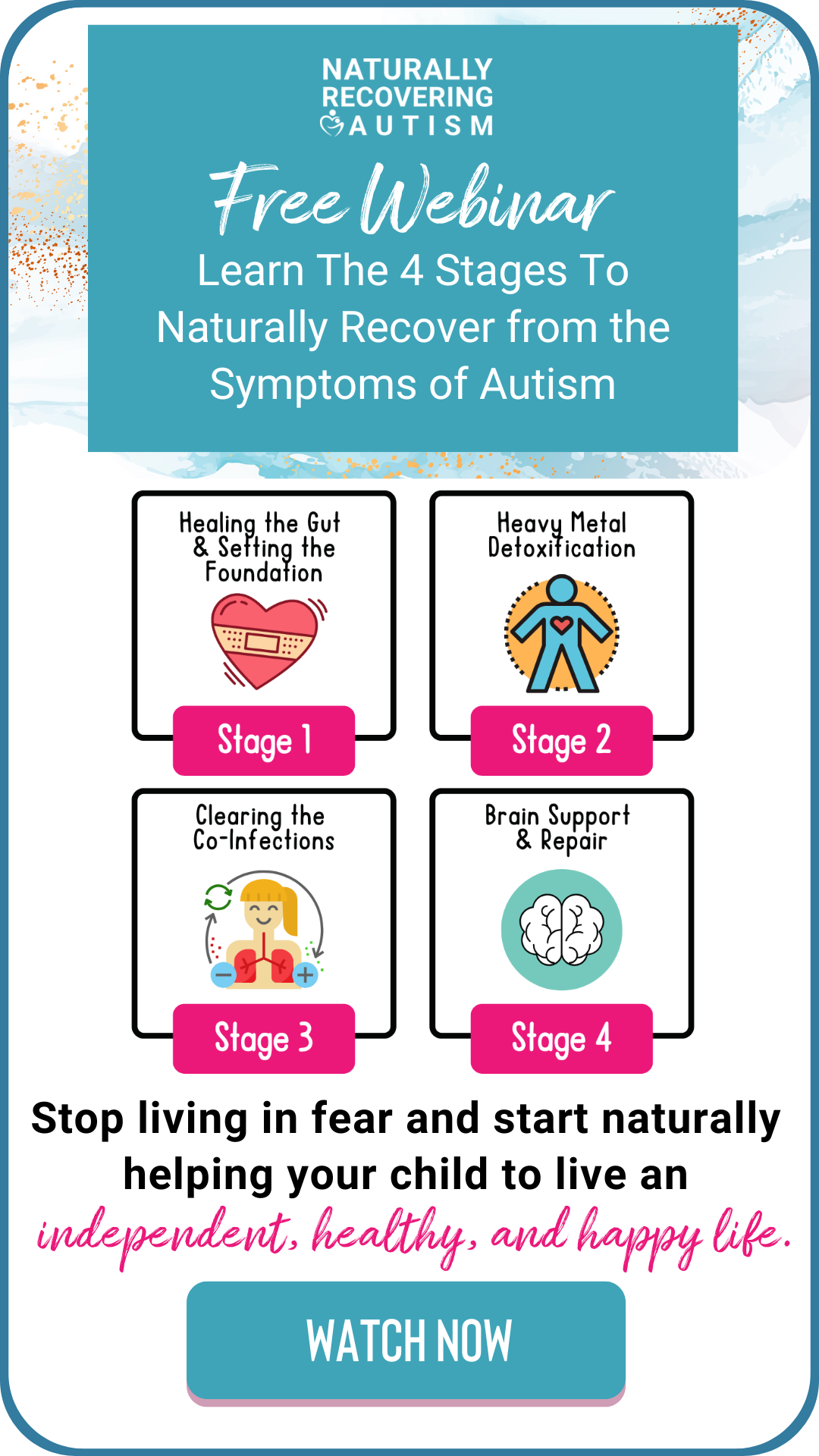
I’ll walk you through the four stages I believe are essential to supporting your child’s health:
- Healing the Gut
- Natural Heavy Metal Detoxification
- Clearing Co-Infections
- Brain Support & Repair
I’ll share what I discovered through my own journey, why I believe the order matters, and how I approach the underlying health challenges that can affect children with autism.
Stop guessing and start understanding the A-Z roadmap I developed through years of research and personal experience.
This is for informational purposes only and is not meant to diagnose or treat. Every child’s level of recovery is different. No two people are the same. It is never implied that all children will have the same outcome. Results are all based on individual biology and the work that is done. This process takes time and various steps, effort and resources need to be weighed. Our programs are intended to help you become more knowledgeable and guide you to help bring your child a better quality of life, whatever that may be. We want to help by giving great content, direction and strategies that move you forward. Nothing on this page or any of our websites is a promise or guarantee of results or future outcomes. The results on this page and any of our websites are not typical or promised. In fact, there will be people who purchase this and other programs and never put the work into implementing the strategies taught and therefore will achieve little to no results. Our more detailed earnings disclaimer, privacy policy, and terms and conditions for this program and website can be accessed via the links below. We hold ourselves (and you) to a high standard of integrity. We are cheering you on every step of the way.