Autism is changing — not because autistic people are changing, but because our understanding of autism is finally catching up to the lived reality of millions of individuals and families.
For decades, autism was described in narrow, stereotypical terms: one “type,” one path, one set of behaviors. The diagnosis was something handed to people, not something that reflected the full complexity of who they were.
But today, the conversation is shifting.
New research, broader cultural understanding, and the voices of autistic individuals themselves are ushering in a more accurate, more compassionate, and more inclusive view.
We’re entering a new era — one where diagnosis, diversity, and identity work together to give us a deeper picture of what autism really means.
Diagnosis: From Narrow Labels to Nuanced Understanding
Historically, autism diagnosis was based on a narrow checklist of observable behaviors. These frameworks unintentionally left out large groups of people, especially:
- women and girls
- people of color
- highly verbal individuals
- masked or high-support-needs individuals
- gender-diverse people
- late-diagnosed autistic adults
Today, researchers and clinicians are acknowledging a simple truth:
Autism doesn’t look the same in everyone — because autism isn’t one thing.
Modern studies are identifying patterns and subtypes that show the spectrum is both broader and more complex than originally understood.
This shift helps explain why some children display intense sensory needs and communication differences, while others show subtle social processing patterns or internalized overwhelm that goes unnoticed for years.
A diagnosis can now be understood as a tool — not an endpoint. It can provide language, direction, and support. But it doesn’t define the whole person.
Diversity: The Spectrum Is Not Linear — It’s Multidimensional
The idea that autism falls on a simple “low to high functioning” line is outdated.
Today’s emerging models describe autism as a constellation:
multiple dimensions of experience, each unique and valid.
This includes differences in:
- sensory processing
- communication style
- emotional regulation
- cognitive patterns
- social expression
- learning pathways
- movement and motor planning
- environmental tolerance
- special interests and passions
No two autistic individuals share the same constellation — and that diversity is part of what makes the spectrum so rich.
This more inclusive view also helps dismantle stereotypes and allows autistic people to define their own identities rather than being boxed into categories.
Identity: Autism as a Neurotype, Not a Deficit
As more autistic adults share their lived experience, society is beginning to understand autism as a neurotype.
This shift is profound.
Autistic individuals are increasingly saying:
“I want to be supported.”
“I want people to understand how I think, not make me think differently.”
“I want acceptance.”
Autism shapes identity in meaningful, beautiful ways:
- deep focus
- creativity
- unique thinking patterns
- heightened sensory experiences
- honesty and authenticity
- exceptional attention to detail
- passionate interests
- innovative problem-solving
- a different — not inferior — communication rhythm
Understanding autism as part of identity opens the door to more dignity, more empowerment, and more self-advocacy.
✨ Where Biology Fits In (Without Touching Identity)
Here’s an important distinction that many parents and autistic adults find relieving:
Identity is the neurology.
Struggle often comes from biology.
What does that mean?
Autism itself is a way of processing, thinking, and interacting with the world.
But many challenges — overwhelm, irritability, sensory crashes, chronic discomfort, sleep issues, gut imbalances — are not personality traits. They’re biological stressors that can affect anyone, autistic or not.
Supporting biology isn’t about changing who someone is.
It’s about helping their body work for them, not against them.
When the body is supported, autistic individuals often feel:
- more regulated
- more comfortable
- less overwhelmed
- more energized
- clearer and more communicative
- more stable emotionally
- more themselves
Identity remains intact — in fact, it shines brighter.
When we combine the understanding of:
- identity
- neurodiversity
- biology
- individual needs
- lived experience
…we create a holistic model of autism that honors the whole person.
Want to Explore How Biology can be supported to make life easier, at any age?
The definition of recovery is to regain health. Improving health from underlying causes such as toxins, pathogens and infections allowing the brain and nervous system to function at the optimum level for that individual. The ‘symptoms’ used to diagnose autism can then reduce or even disappear for many. We know what that is when all 4 stages have been done properly and thoroughly.
I’m hosting a free, transformative event:
✨
A gentle, holistic, neurodiversity-respectful approach to supporting the underlying biological stressors that can make life harder so your child can live to their full potential.
You’ll learn:
- why two autistic children with the same diagnosis can have very different needs
- the biological layers that often impact regulation, mood, sleep, behavior, and comfort
- how to support your child’s body in ways that align with their identity
- how to give them more comfort, resilience, and clarity for more stability
If you want a deeper, more compassionate, more modern understanding of autism — with practical steps for supporting your child’s well-being — then please register now for my free webinar, “The 4 Necessary Stages To Optimum Results In Autism Recovery”. Register here.
Free Online Event
The 4 Stage
Autism Recovery Reset
How You, as a Parent, Can Take Action Now
With an A-Z, Step-By-Step Roadmap!
1-HOUR LIVE EVENT + Q&A
THURSDAY, OCTOBER 22ND, AT 5PM PT | 8PM ET
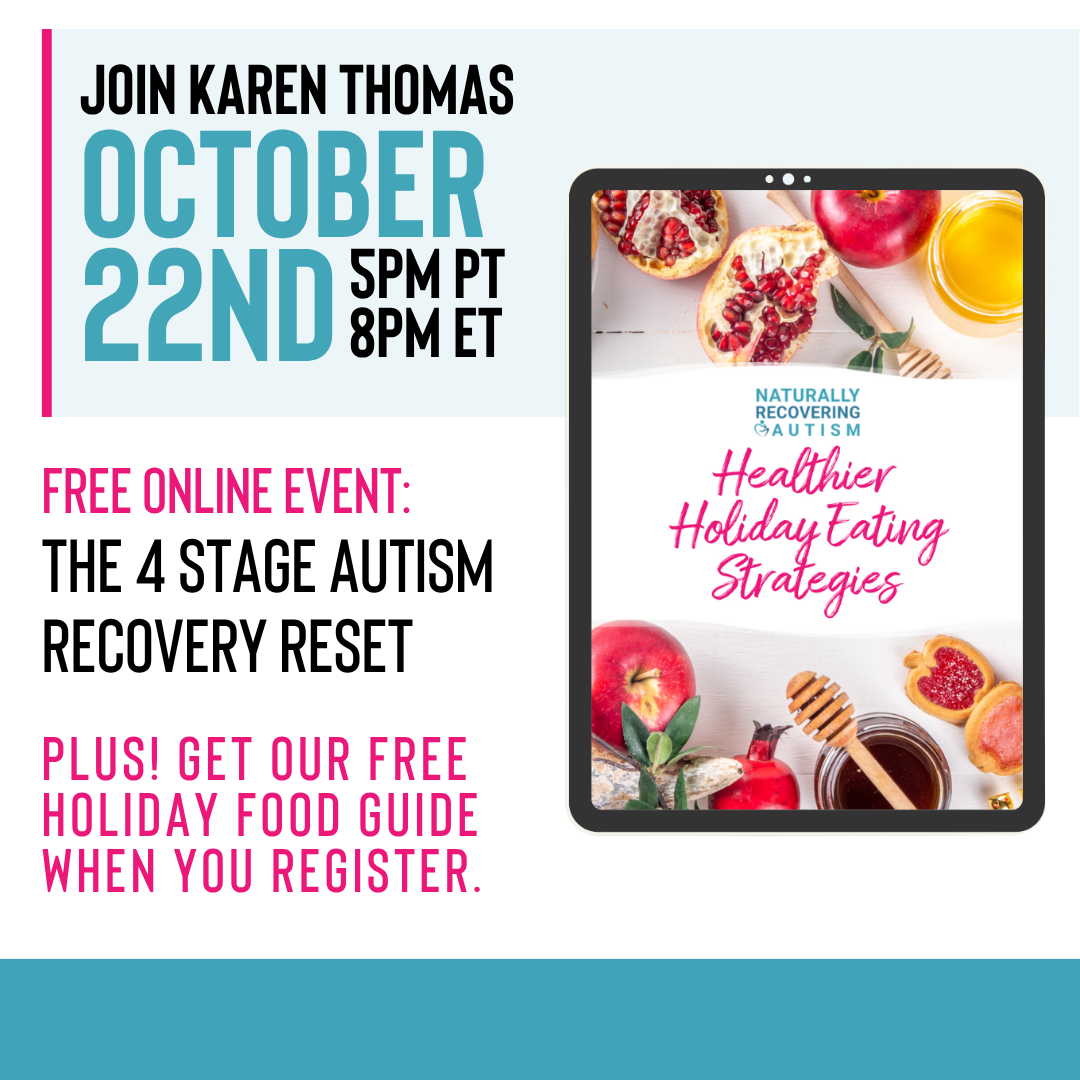
If the time doesn't work for you, sign up anyway, and I'll send you the replay.
After watching my own son transform from struggling with severe symptoms to living a healthy, independent life, I spent years researching, learning, and developing the approach I now teach to families around the world.
In this free live online event, I will teach you what most doctors don’t even know is absolutely necessary to achieve your child’s optimal outcome to ensure their healthiest, happiest, and most fulfilling life.
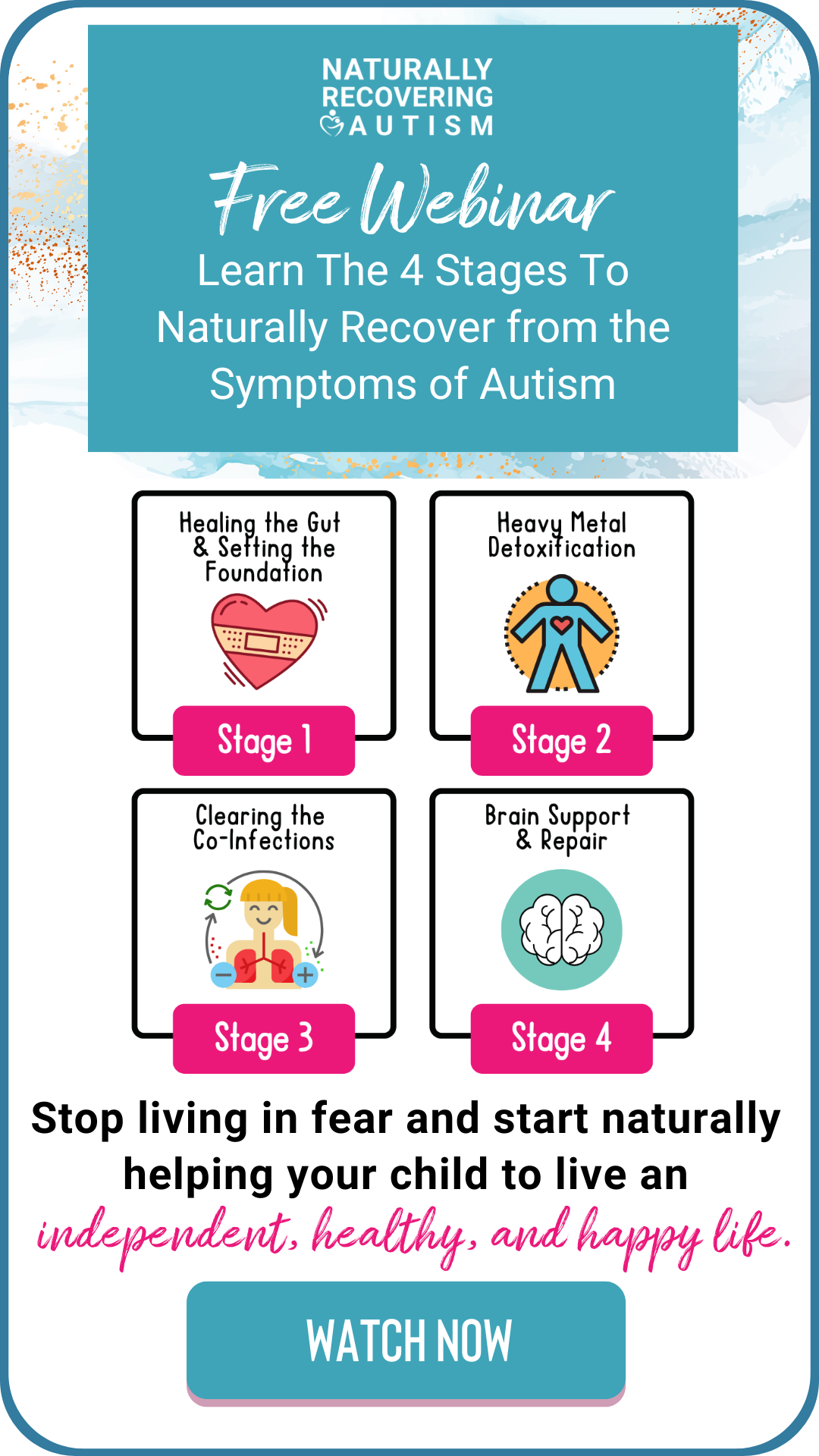
I’ll walk you through the four stages I believe are essential to supporting your child’s health:
- Healing the Gut
- Natural Heavy Metal Detoxification
- Clearing Co-Infections
- Brain Support & Repair
I’ll share what I discovered through my own journey, why I believe the order matters, and how I approach the underlying health challenges that can affect children with autism.
Stop guessing and start understanding the A-Z roadmap I developed through years of research and personal experience.
This is for informational purposes only and is not meant to diagnose or treat. Every child’s level of recovery is different. No two people are the same. It is never implied that all children will have the same outcome. Results are all based on individual biology and the work that is done. This process takes time and various steps, effort and resources need to be weighed. Our programs are intended to help you become more knowledgeable and guide you to help bring your child a better quality of life, whatever that may be. We want to help by giving great content, direction and strategies that move you forward. Nothing on this page or any of our websites is a promise or guarantee of results or future outcomes. The results on this page and any of our websites are not typical or promised. In fact, there will be people who purchase this and other programs and never put the work into implementing the strategies taught and therefore will achieve little to no results. Our more detailed earnings disclaimer, privacy policy, and terms and conditions for this program and website can be accessed via the links below. We hold ourselves (and you) to a high standard of integrity. We are cheering you on every step of the way.