Including transition programs, supportive communities, and key questions to ask before choosing the right fit.
For many autism families, one of the biggest questions is:
“What happens after high school?”
Parents often spend years focusing on therapies, education, communication, and daily support. But eventually, another important goal comes into view—helping their child become as independent as possible while living a fulfilling, meaningful life.
The good news is that more communities, transition programs, and independent living models are emerging across the United States to support autistic teens, young adults, and adults. These programs go far beyond simply providing housing. The best ones help individuals develop life skills, employment skills, social connections, and the confidence needed to thrive.
Independence Doesn’t Have to Mean Doing Everything Alone
One of the biggest misconceptions about independent living is that it means living completely alone without support.
In reality, successful independence often includes the right amount of assistance, coaching, and community.
Many autistic adults thrive when they have support with:
- Budgeting and money management
- Meal planning and cooking
- Transportation
- Employment preparation
- Social skills and relationships
- Executive functioning
- Healthcare management
- Household organization
The goal isn’t perfection. The goal is helping each individual reach their highest level of independence and quality of life.
What to Look for in an Autism-Friendly Independent Living Community
When researching programs, don’t focus solely on the housing itself.
Look for communities that provide:
1. Life Skills Training
The strongest programs teach practical daily living skills such as cooking, cleaning, laundry, budgeting, personal organization, and time management.
Programs such as the College Internship Program (CIP) and First Place Transition Academy emphasize real-world practice in apartment-style living environments where young adults can learn and apply these skills daily. (CIP)
2. Employment and Career Development
Meaningful work often plays a major role in long-term independence.
Look for programs that provide:
- Career exploration
- Vocational assessments
- Job coaching
- Internship opportunities
- Employment placement assistance
Successful transition programs recognize that employment is often one of the strongest predictors of long-term independence and life satisfaction. (SLLEA)
3. Community Integration
A great community isn’t isolated.
Look for opportunities for residents to:
- Volunteer
- Participate in local events
- Join clubs and activities
- Build friendships
- Access public transportation
- Engage in recreational programs
The most successful programs help individuals become active members of their communities rather than remaining separated from them.
4. Flexible Levels of Support
Every autistic individual is different.
Some adults may need only occasional coaching, while others benefit from daily support.
Programs offering flexible support levels can adapt as needs change over time, allowing individuals to gain more independence without losing access to assistance when needed. (Chapel Haven Schleifer Center)
Examples of Independent Living and Transition Programs
Across the country, several organizations are creating innovative models for autistic adults.
Some examples include:
-
- First Place Transition Academy in Arizona, which combines apartment living, life skills training, employment preparation, and social development. (SARRC)
- Chapel Haven in Connecticut, which offers residential, educational, vocational, and lifelong support services for adults with autism. (Chapel Haven Schleifer Center)
- CIP (College Internship Program), which provides structured transition programs focused on life skills, employment, executive functioning, and community integration. (CIP)
- Smart Living, Learning & Earning with Autism (SLLEA), which focuses on independent living, education, and employment through autism-specific supports and technology-assisted environments. (SLLEA)
- Communities are in the process of being constructed that will house, employ and care for people with autism. Please listen to my recent podcast episode #247 on this, Housing, Support and Community for Individuals with Autism [Podcast Episode #247]
These programs demonstrate that independent living can take many forms, from supported apartments to transition academies and community-based living models.
Questions to Ask Before Choosing a Program
When evaluating a community or transition program, consider asking:
- What level of support is available?
- How are life skills taught and practiced?
- What employment opportunities exist?
- How does the program promote social connections?
- What transportation options are available?
- How is progress measured?
- Can support levels increase or decrease as needs change?
- What happens after the transition program ends?
The answers to these questions often reveal far more than brochures and websites alone.
A Future Filled with Possibilities
For decades, many families were led to believe that autism automatically meant lifelong dependence.
Today, we know that isn’t true.
With the right supports, environment, opportunities, and community, many autistic teens, young adults, and adults can build meaningful lives that include friendships, employment, purpose, and increasing independence.
The journey looks different for every individual. But independence is not an all-or-nothing destination—it is a process of growth.
As more autism-friendly housing communities, transition academies, and supported living programs emerge throughout the United States, families have more options than ever before to help their loved ones move confidently into adulthood and create a future that reflects their unique strengths and potential.
♥
You’re Invited
In my free online training, I’ll walk you through the exact four-stage roadmap I used to help my own son recover from the symptoms of autism, and that I’ve taught thousands of families around the world.
Watch now at, NaturallyRecoveringAutism.com/freeworkshop
Learn my 4-Stage Process for Naturally Recovering from the Symptoms of Autism
What if you had a clear roadmap instead of constantly trying one thing after another?
After watching my own son transform from struggling with severe symptoms to living a healthy, independent life, I spent years researching, learning, and developing the approach I now teach to families around the world.
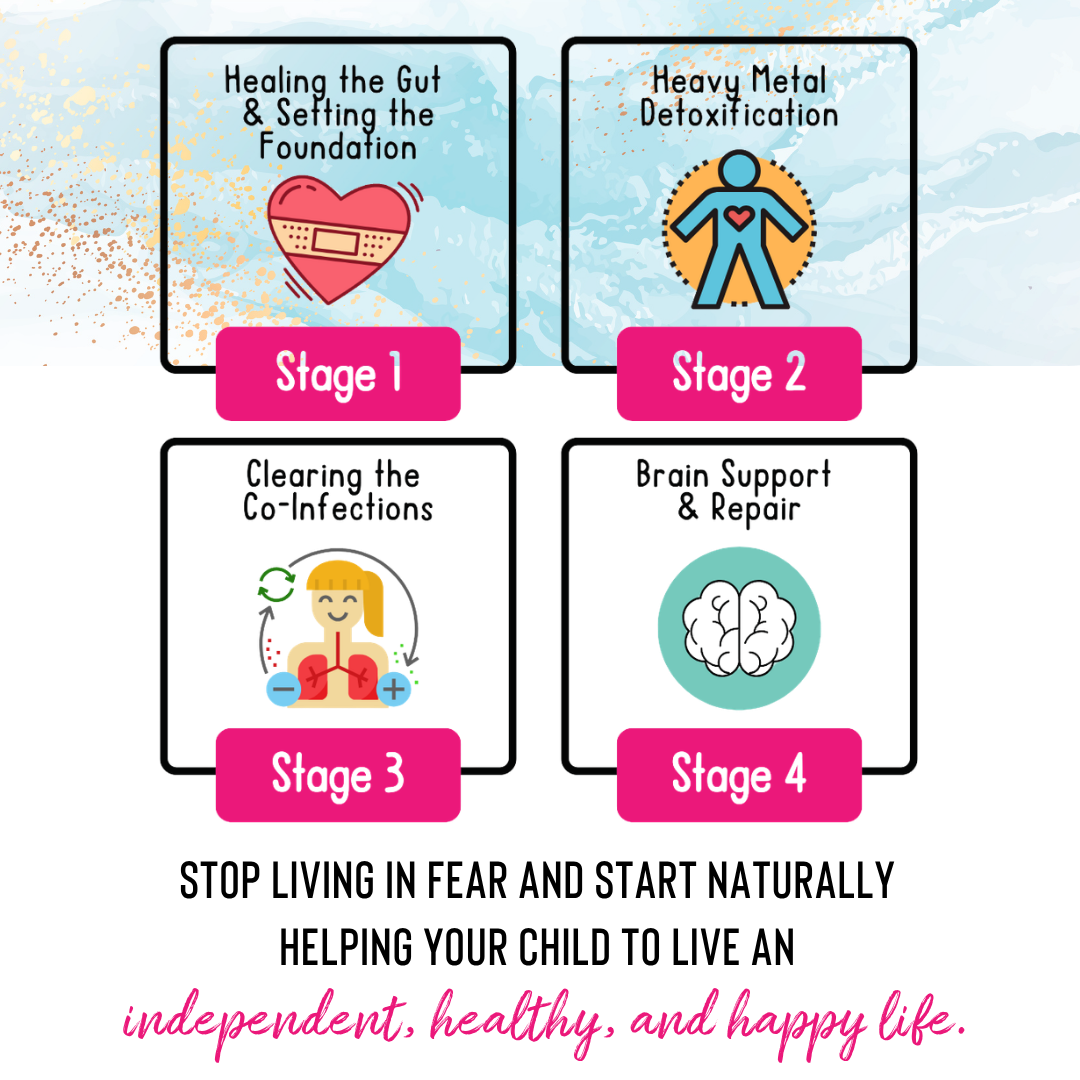
In my free online webinar, The 4 Stages to Naturally Recover from the Symptoms of Autism, I’ll walk you through the four stages I believe are essential to supporting your child’s health:
- Healing the Gut
- Natural Heavy Metal Detoxification
- Clearing Co-Infections
- Brain Support & Repair
I’ll share what I discovered through my own journey, why I believe the order matters, and how I approach the underlying health challenges that can affect children with autism.
Stop guessing and start understanding the roadmap I developed through years of research and personal experience.
I created this webinar to give you the information and roadmap I wish I had when I was trying to figure out how to help my own son.
This is for informational purposes only and is not meant to diagnose or treat. Every child’s level of recovery is different. No two people are the same. It is never implied that all children will have the same outcome. Results are all based on individual biology and the work that is done. This process takes time and various steps, effort and resources need to be weighed. Our programs are intended to help you become more knowledgeable and guide you to help bring your child a better quality of life, whatever that may be. We want to help by giving great content, direction and strategies that move you forward. Nothing on this page or any of our websites is a promise or guarantee of results or future outcomes. The results on this page and any of our websites are not typical or promised. In fact, there will be people who purchase this and other programs and never put the work into implementing the strategies taught and therefore will achieve little to no results. Our more detailed earnings disclaimer, privacy policy, and terms and conditions for this program and website can be accessed via the links below. We hold ourselves (and you) to a high standard of integrity. We are cheering you on every step of the way.