Supplements and health technologies can support the body in very different ways. In this episode we will talk about how they differ, why delivery methods matter, and how to choose the right approach.
When most people think about improving their health, they often think about supplements.
Vitamins.
Minerals.
Herbs.
Amino acids.
Nutrients.
But supplements aren’t the only tools available.
Today, there are also many different health technologies designed to interact with the body in ways that don’t involve taking a pill, powder, or liquid.
So what’s the difference?
And how do you know which approach is right for you?
The answer begins with understanding that supplements and health technologies are fundamentally different categories.
They may have completely different mechanisms of action and delivery methods.
That’s why I believe it’s important to understand how each works before deciding whether it deserves a place in your overall health approach.
How Supplements Work
Supplements generally provide the body with substances that it can use.
Depending on the supplement, this might include:
- Vitamins
- Minerals
- Amino acids
- Fatty acids
- Herbs
- Enzymes
- Other nutritional compounds
The body must then process these substances.
This is where factors such as digestion, absorption, metabolism, and bioavailability become important.
Two products may contain the same ingredient but still behave differently in the body depending on the form, dosage, quality, and delivery system.
That’s why I don’t simply look at the ingredients listed on the label.
I want to know:
What form is it in? There are liquids, capsules, powders and pills.
How well can the body absorb it? Is it bioavailable, ie as a supplement, how well can your body can easily absorb and actually use it?
Is the dosage appropriate?
What other ingredients are included? Does it have any bad fillers?
How is it manufactured? Processing is important as many contain contaminants we don’t want.
These questions can make a significant difference when evaluating a supplement.
What About Health Technologies?
Health technologies can be very different.
Rather than providing nutrients or compounds to the body, some technologies are designed to interact with the body’s own processes through a different type of delivery method.
For example, certain technologies may use light, sound, electrical stimulation, temperature, or other forms of energy.
The underlying mechanisms vary significantly from one technology to another.
This means that I can’t evaluate every technology using the exact same criteria I would use for a supplement.
I have to understand what the technology is designed to do, how it is delivered, and what evidence supports its proposed mechanism.
Why Delivery Method Matters
The way something is delivered can be just as important as what it is.
With a supplement, the delivery method may influence absorption and bioavailability.
With health technologies, the delivery method may be an essential part of how the technology is designed to function.
That’s why I always ask:
How does this technology interact with the body? Is it non-invasive?
What is the proposed mechanism? How does it work?
What research supports that mechanism?
What makes this approach different? Is it distinctly unique in any way?
Understanding the delivery method helps with understanding what We’re actually evaluating.
How Supplements Work
Supplements generally provide the body with substances that it can use.
Depending on the supplement, this might include:
- Vitamins
- Minerals
- Amino acids
- Fatty acids
- Herbs
- Enzymes
- Other nutritional compounds
The body must then process and be able to utilize these substances.
This is where factors such as digestion, absorption, metabolism, and bioavailability become important.
Two products may contain the same ingredient but still behave differently in the body depending on the form, dosage, quality, and delivery system.
And there’s another important consideration that I believe is often overlooked: the health of the digestive system itself.
If someone has poor digestive function or compromised gut integrity, their ability to properly digest and absorb nutrients may be affected. This means that even if someone is consuming high-quality foods or taking carefully selected supplements, they may not be absorbing and utilizing those nutrients as effectively as they should.
This is something I have seen frequently in the individuals and families I work with, including children with autism who may have digestive or gut-related challenges.
That’s why bioavailability is such an important consideration.
It’s not enough to ask, “Is this nutrient in the product?”
We also need to ask:
Can the body absorb it?
Can the body utilize it?
Is it in a form that is readily available to the body?
Does the person’s digestive system have the ability to process it effectively?
This is one reason I pay close attention to the form and delivery method of a supplement. The goal isn’t simply to put more nutrients into the body. The goal is to provide nutrients in a form that the body can actually access and utilize.
That’s why I don’t simply look at the ingredients listed on the label.
I want to know:
What form is it in?
How well can the body absorb it?
Is the dosage appropriate?
What other ingredients are included?
How is it manufactured?
These questions can make a significant difference when evaluating a supplement.
Different Doesn’t Automatically Mean Better
I think it’s important to say that just because something is new or different doesn’t automatically make it better.
A new technology still needs to be evaluated.
It still needs to be researched.
The company still needs to be investigated.
Quality and safety still matter.
The fact that something is innovative is a reason to become curious—not a reason to stop asking questions.
That’s why I use the same overall framework with everything I consider.
I want to understand the science.
I want to know about the quality.
I want to know who is behind it.
I want to understand the delivery method.
I want to consider safety.
I want to know whether it is practical. How easy is it to use?
And I want to determine whether it offers meaningful value.
Sometimes It’s Not Either-Or
One of the things I find most interesting is that supplements and health technologies don’t necessarily have to compete with one another.
They can serve completely different purposes.
A person may use nutritional support while also exploring a technology that works through an entirely different pathway.
The important thing is understanding what each approach is designed to do and how it fits into the bigger picture.
I believe in building a thoughtful, individualized approach rather than constantly looking for one magic solution.
Sometimes the most effective strategy is to combine several foundational approaches that complement one another.
The Importance of Individual Needs
There is another reason I don’t believe in a one-size-fits-all approach.
Every person is different.
We have different nutritional needs.
Different lifestyles.
Different sensitivities.
Different health histories.
Different goals.
That’s why something that works well for one person may not be the right choice for someone else.
When I’m evaluating a supplement or technology, I always come back to the individual.
Does this make sense for this person?
Does it fit into their life?
Can they use it consistently?
Is the investment reasonable?
Does it complement what they’re already doing?
Those questions are just as important as the science.
My Approach to Choosing Between the Two
I don’t think the question should always be:
“Should I use a supplement or a technology?”
Instead, I think the better question is:
“What does this individual need, and what tools might appropriately support those needs to assist in reaching their ultimate goal?”
Sometimes the answer may be nutritional support.
Sometimes it may be a health technology.
Often it’s both.
The important thing is to understand what you’re choosing and why.
Why I Keep an Open Mind
After decades of working in holistic health, I’ve learned that some of the most interesting tools are the ones I might never have discovered if I had been unwilling to look beyond what I already knew.
I can’t even count how many valuable tools I might have missed if I hadn’t been open to exploring them further and experiencing them for myself.
That doesn’t mean I accept every new product or technology that comes along.
Quite the opposite.
It means I stay curious while remaining discerning.
I ask questions.
I investigate.
I look at the research.
I consider the company.
And when appropriate, I use something myself so I can gain firsthand experience.
Because sometimes, the best way to understand whether something deserves further consideration is to be willing to explore it with an open but thoughtful mind.
The Bottom Line
Whether you’re considering a supplement, a health technology, or another approach to supporting your health, I encourage you to ask questions.
Don’t choose something simply because it’s popular.
Don’t reject something simply because it’s unfamiliar.
Learn how it works.
Understand the evidence.
Look at the quality.
Research the company.
Consider the delivery method.
Think about your individual needs.
And ask whether it makes sense for you.
That’s the approach I use when evaluating the tools I consider for myself, my family, and the individuals and families I serve.
Because ultimately, the goal isn’t to find the most popular product.
It’s to find the right tools for the right person at the right time.
This is one of the reasons I’ve become interested in exploring health technologies that do not rely on the digestive system for delivery. One example is a very specific phototherapy patch technology, which uses an entirely different approach. It actually does not put anything into the body, but activates the body’s own healing abilities.
In my next podcast, I’ll explain what caught my attention about this particular technology, what I wanted to understand before using it, and why I ultimately decided it was worth exploring for myself, my own family, and sharing it with others for the value it offers.
If you’re curious to learn more about this technology now, then please go to ThrivingWithPatches.com where you can learn more, including the science behind it and my personal story using it.
♥
See the additional blog post and podcast related to this topic:
10 Questions I Ask Before I Trust A Health Product or Technology [Podcast Episode #251]
Learn my 4-Stage Process for Naturally Recovering from the Symptoms of Autism
What if you had a clear roadmap instead of constantly trying one thing after another?
After watching my own son transform from struggling with severe symptoms to living a healthy, independent life, I spent years researching, learning, and developing the approach I now teach to families around the world.
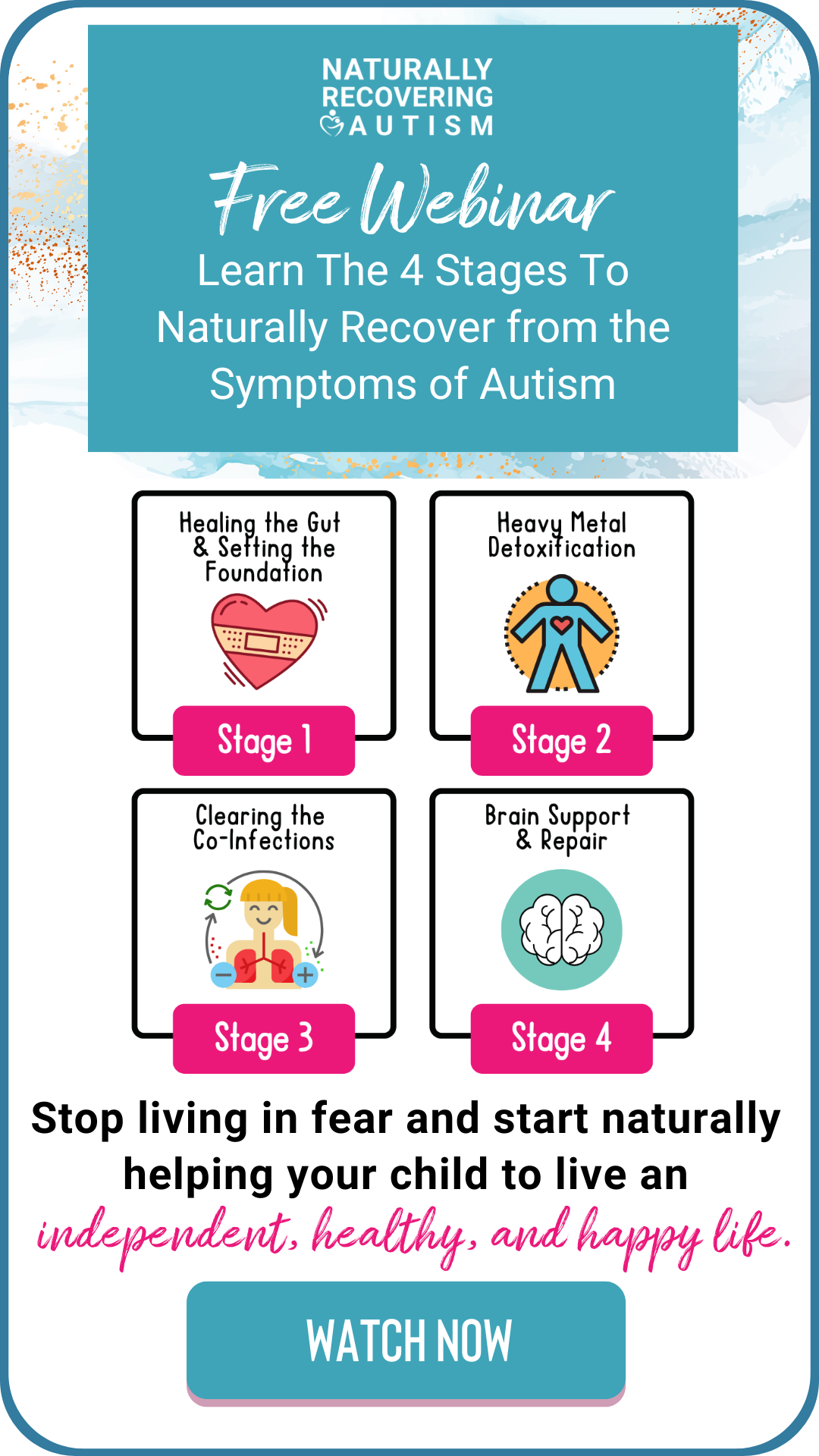
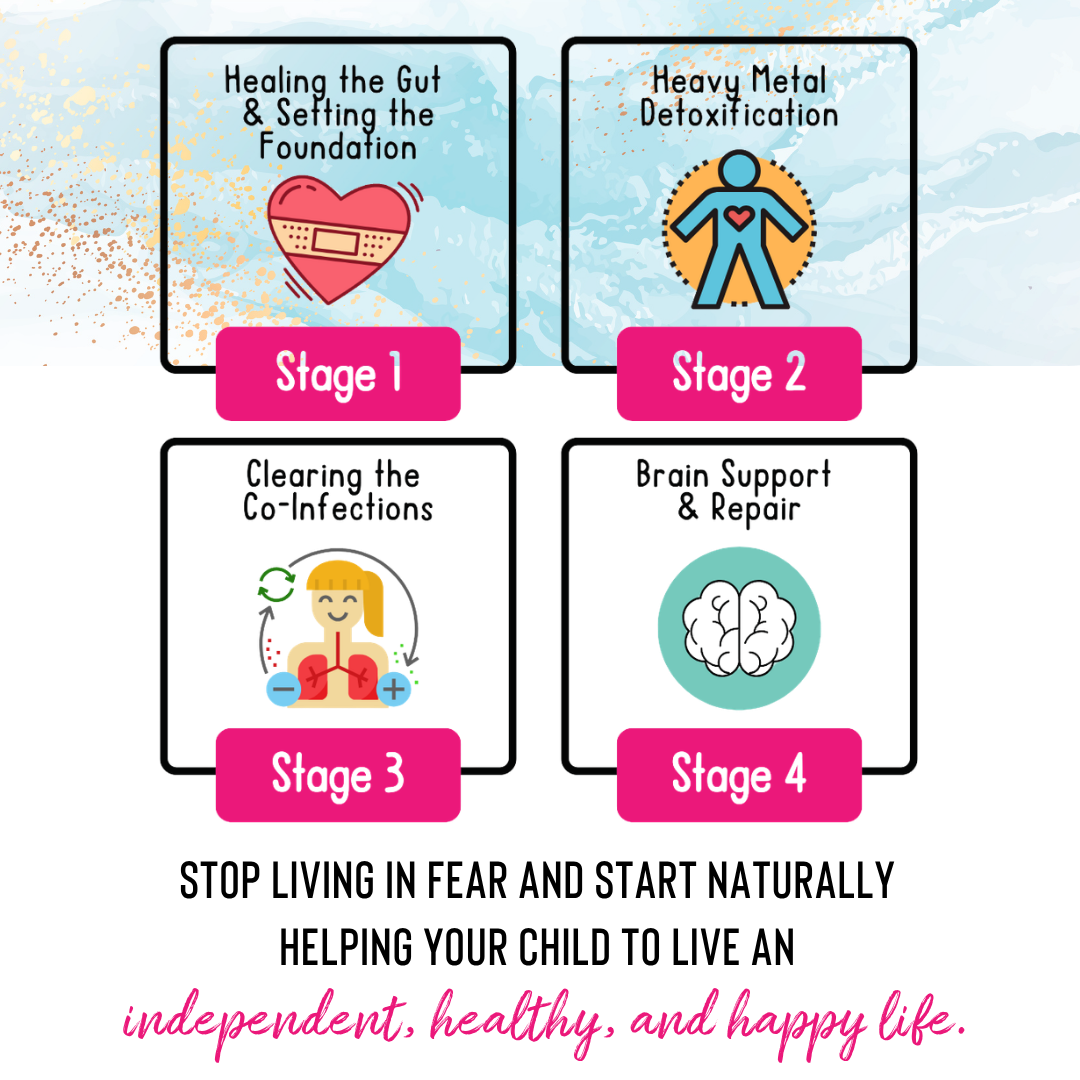
In my free online webinar, The 4 Stages to Naturally Recover from the Symptoms of Autism, I’ll walk you through the four stages I believe are essential to supporting your child’s health:
- Healing the Gut
- Natural Heavy Metal Detoxification
- Clearing Co-Infections
- Brain Support & Repair
I’ll share what I discovered through my own journey, why I believe the order matters, and how I approach the underlying health challenges that can affect children with autism.
Stop guessing and start understanding the roadmap I developed through years of research and personal experience.
I created this webinar to give you the information and roadmap I wish I had when I was trying to figure out how to help my own son.
This is for informational purposes only and is not meant to diagnose or treat. Every child’s level of recovery is different. No two people are the same. It is never implied that all children will have the same outcome. Results are all based on individual biology and the work that is done. This process takes time and various steps, effort and resources need to be weighed. Our programs are intended to help you become more knowledgeable and guide you to help bring your child a better quality of life, whatever that may be. We want to help by giving great content, direction and strategies that move you forward. Nothing on this page or any of our websites is a promise or guarantee of results or future outcomes. The results on this page and any of our websites are not typical or promised. In fact, there will be people who purchase this and other programs and never put the work into implementing the strategies taught and therefore will achieve little to no results. Our more detailed earnings disclaimer, privacy policy, and terms and conditions for this program and website can be accessed via the links below. We hold ourselves (and you) to a high standard of integrity. We are cheering you on every step of the way.