Halloween is such an exciting time for kids. Costumes, parties, decorations, trick-or-treating—and, of course, lots and lots of candy.
But if you have a child with autism, Halloween can sometimes come with challenges you weren’t expecting.
Maybe your child becomes more hyperactive or irritable. Sleep gets disrupted. Digestion changes. You notice more difficulty focusing or regulating emotions. Or perhaps you’ve worked hard to make dietary changes at home, and suddenly your child comes home with a bag filled with foods and ingredients you normally try to avoid.
The good news is that Halloween doesn’t have to mean taking all the fun away.
With a little planning, you can help your child enjoy Halloween while still supporting the healthy habits you’ve worked so hard to create.
Why Halloween Candy Can Be Challenging
One of the things I always encourage parents to do is look beyond a symptom and ask:
What changed?
We talked about this recently with going back to school. A child may suddenly be exposed to different foods, environmental factors, disrupted routines, less sleep, or other changes.
Halloween can create another sudden change.
A child who normally eats a relatively clean diet may suddenly consume significantly more sugar, artificial colors, flavors, preservatives, and other ingredients than usual.
For some children, parents may notice changes in behavior, digestion, sleep, focus, or overall well-being around the same time.
That doesn’t mean every child will react the same way. Our children are individuals, and their bodies can respond very differently.
The important thing is to pay attention to your own child.
Look Beyond the Sugar
When parents think about Halloween candy, sugar is usually the first thing that comes to mind.
And yes, Halloween can bring a tremendous amount of sugar into a child’s diet in a very short period of time.
But sugar isn’t the only thing I look at.
Many brightly colored candies and processed treats contain long ingredient lists that may include artificial colors, artificial flavors, preservatives, corn syrup, and other highly processed ingredients.
This is why I encourage parents to become label readers.
Turn that package over and look at what is actually in it.
Sometimes we become so focused on the front of a package—especially words like “natural,” “gluten-free,” or “organic”—that we forget to look at the ingredient list.
Remember: gluten-free doesn’t automatically mean healthy.
A gluten-free candy or cookie can still contain a lot of sugar, artificial ingredients, or other things that may not be a good fit for your child.
Food Dyes Are Worth Paying Attention To
Artificial food colors are another ingredient parents may want to watch.
Brightly colored candies can contain several different synthetic dyes, and some children appear to be more sensitive to these ingredients than others.
If you’ve noticed that your child tends to become more restless, irritable, unfocused, or has difficulty sleeping after eating certain brightly colored foods, start paying attention to the labels and looking for patterns.
You don’t have to guess.
Keep things simple.
Write down what your child ate and what you noticed afterward. Over time, patterns can become much easier to recognize.
Feed Your Child Before Trick-or-Treating
This is one of my favorite simple Halloween tips.
Don’t send your child trick-or-treating hungry.
Give them a nourishing meal beforehand that includes protein, healthy fats, and foods you already know work well for them.
If a child starts the evening hungry and is carrying a bag full of candy, resisting that candy becomes much harder.
A satisfying meal beforehand can make the evening easier for everyone.
And remember hydration too.
Make sure your child drinks plenty of good-quality water throughout the day and evening.
Decide on the Candy Plan Before Halloween
Trying to negotiate over a giant bag of candy at the end of an exciting evening isn’t ideal.
Instead, decide on your plan beforehand.
Depending on your child’s age and level of understanding, talk about it together.
Perhaps your child chooses a certain number of treats to keep. Maybe you exchange some of the candy for a special toy, activity, book, or another reward your child enjoys.
Some families even create a fun tradition where unwanted candy gets “traded in” for something special.
The goal isn’t to make Halloween feel restrictive.
It is to create boundaries ahead of time so your child knows what to expect.
Create Better Treat Options at Home
Having alternatives available can make Halloween much easier.
Depending on your child’s individual dietary needs, you might offer things such as:
- Dark chocolate with simple ingredients
- Homemade gluten-free cookies
- Fresh fruit with melted dark chocolate
- Apple slices with a favorite nut butter, when appropriate
- Gluten-free snack bars with simple ingredients
- Treats made without artificial colors and flavors
- Small non-food surprises such as stickers, toys, art supplies, or glow sticks
You can even make your healthier alternatives feel extra special by putting them in Halloween-themed bags or containers.
Presentation matters to kids, too!
A Simple Gluten-Free Halloween Treat
Here’s one that’s easy enough to make with your child.
Chocolate-Dipped Apple Bites
Ingredients:
- 1–2 organic apples
- Dark chocolate or chocolate chips with ingredients that work for your child
- Optional toppings such as unsweetened shredded coconut or finely chopped nuts or seeds, if tolerated
Directions:
Cut the apples into slices or bite-sized pieces.
Melt the chocolate gently.
Dip part of each apple piece into the melted chocolate and add your toppings.
Place them on parchment paper and refrigerate until the chocolate has set.
It’s simple, festive, naturally gluten-free when you use verified gluten-free ingredients, and something children can help make.
Watch for More Than Food
Halloween isn’t only about candy.
For some children with autism, the entire experience can be a lot.
Costumes may feel uncomfortable. Masks can be frightening. Doorbells are ringing. People are talking loudly. There may be flashing lights, unfamiliar decorations, crowds, and changes to the normal evening routine.
If your child becomes overwhelmed, it may not be the candy at all—or it may be several things happening together.
Give yourself permission to adapt Halloween to your child’s needs.
Maybe you trick-or-treat for 20 minutes instead of two hours.
Maybe your child doesn’t want to wear a costume.
Maybe you visit only a few familiar houses.
Maybe you have a Halloween celebration at home.
There is no rule saying Halloween has to look a certain way.
Protect Sleep as Much as Possible
Sleep is another piece that’s easy to overlook.
Halloween is exciting, and children may stay up later than usual. Add sugar, stimulation, parties, costumes, and a disrupted bedtime routine, and sleep can become difficult.
Try to preserve as much of your child’s normal bedtime routine as possible.
If Halloween night runs late, return to your regular schedule the following day rather than allowing several days of disrupted sleep to follow.
Little things add up.
Halloween Doesn’t Have to Mean Missing Out
I know how hard parents work to make healthy choices for their children.
And sometimes holidays can feel like everything you’ve been carefully doing suddenly gets turned upside down.
It doesn’t have to.
The goal isn’t perfection.
It’s awareness.
You can let your child participate, have fun, dress up, trick-or-treat, enjoy something special, and still make thoughtful choices about what goes into their body.
And if your child does eat something you wouldn’t normally give them?
Don’t panic.
One night doesn’t undo everything you’ve been doing.
Simply return to the healthy routines that support your child.
Keep Looking at the Whole Picture
This is something I learned years ago while searching for answers for my own son, and it remains one of the most important things I teach parents today.
We want to look at the whole child.
Nutrition matters. Gut health matters. Sleep matters. Environmental exposures matter. Immune health matters. And supporting the brain and body together matters.
Instead of chasing each individual symptom, we can start looking for patterns and asking better questions.
What changed?
What might my child be reacting to?
What can I change or support?
Those questions can give parents valuable clues.
So this Halloween, enjoy the costumes, take the pictures, have some fun, and remember—you can create a healthier Halloween without taking away the magic.
Want a Clearer Roadmap?
If you’re looking for a step-by-step approach to understanding some of the underlying factors that may be affecting your child, I invite you to watch my free autism recovery workshop.
I’ll walk you through the key areas I believe parents should understand and show you how these pieces can fit together into a more organized, holistic approach.
Free Online Event
The 4 Stage
Autism Recovery Reset
How You, as a Parent, Can Take Action Now
With an A-Z, Step-By-Step Roadmap!
1-HOUR LIVE EVENT + Q&A
THURSDAY, OCTOBER 22ND, AT 5PM PT | 8PM ET
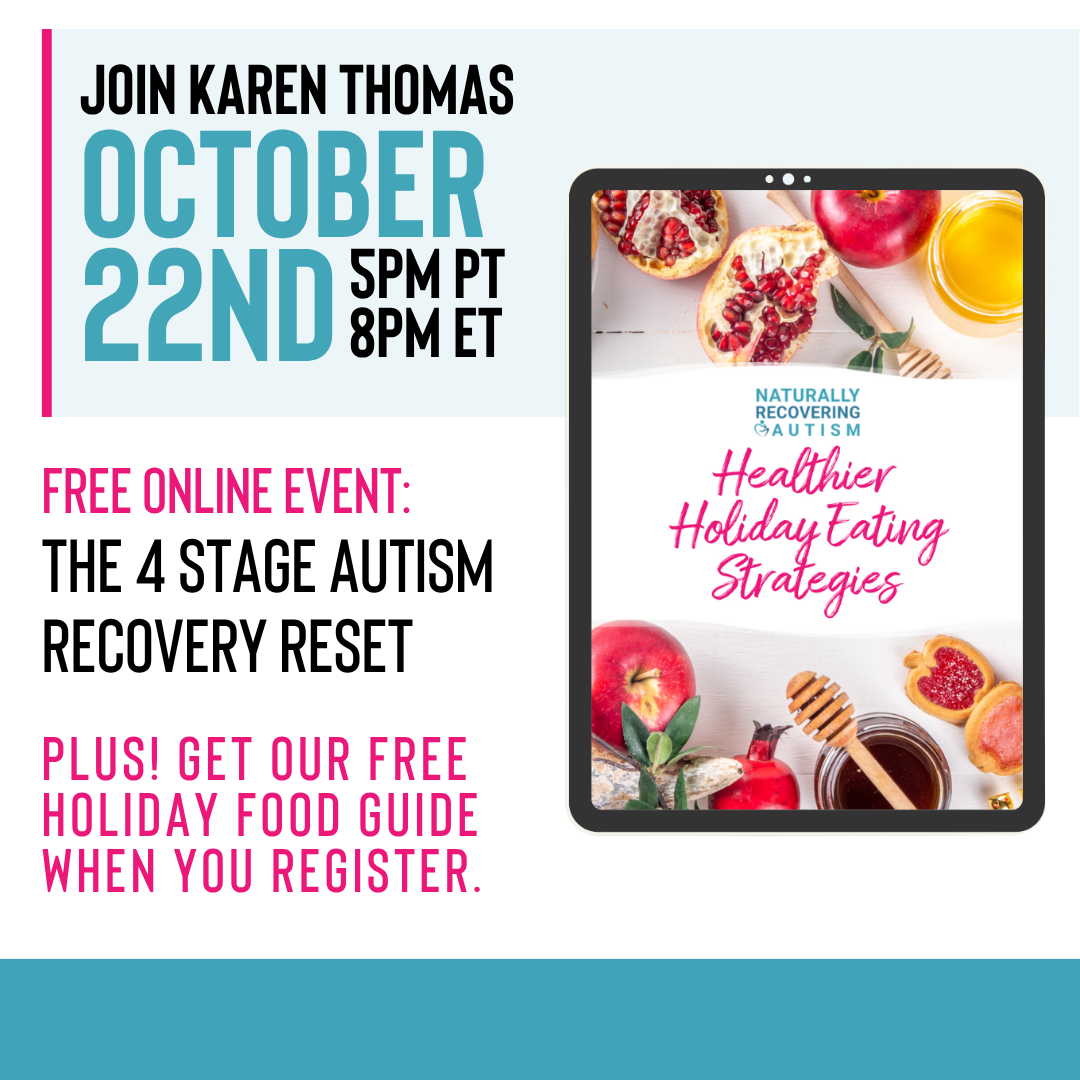
If the time doesn't work for you, sign up anyway, and I'll send you the replay.
After watching my own son transform from struggling with severe symptoms to living a healthy, independent life, I spent years researching, learning, and developing the approach I now teach to families around the world.
In this free live online event, I will teach you what most doctors don’t even know is absolutely necessary to achieve your child’s optimal outcome to ensure their healthiest, happiest, and most fulfilling life.
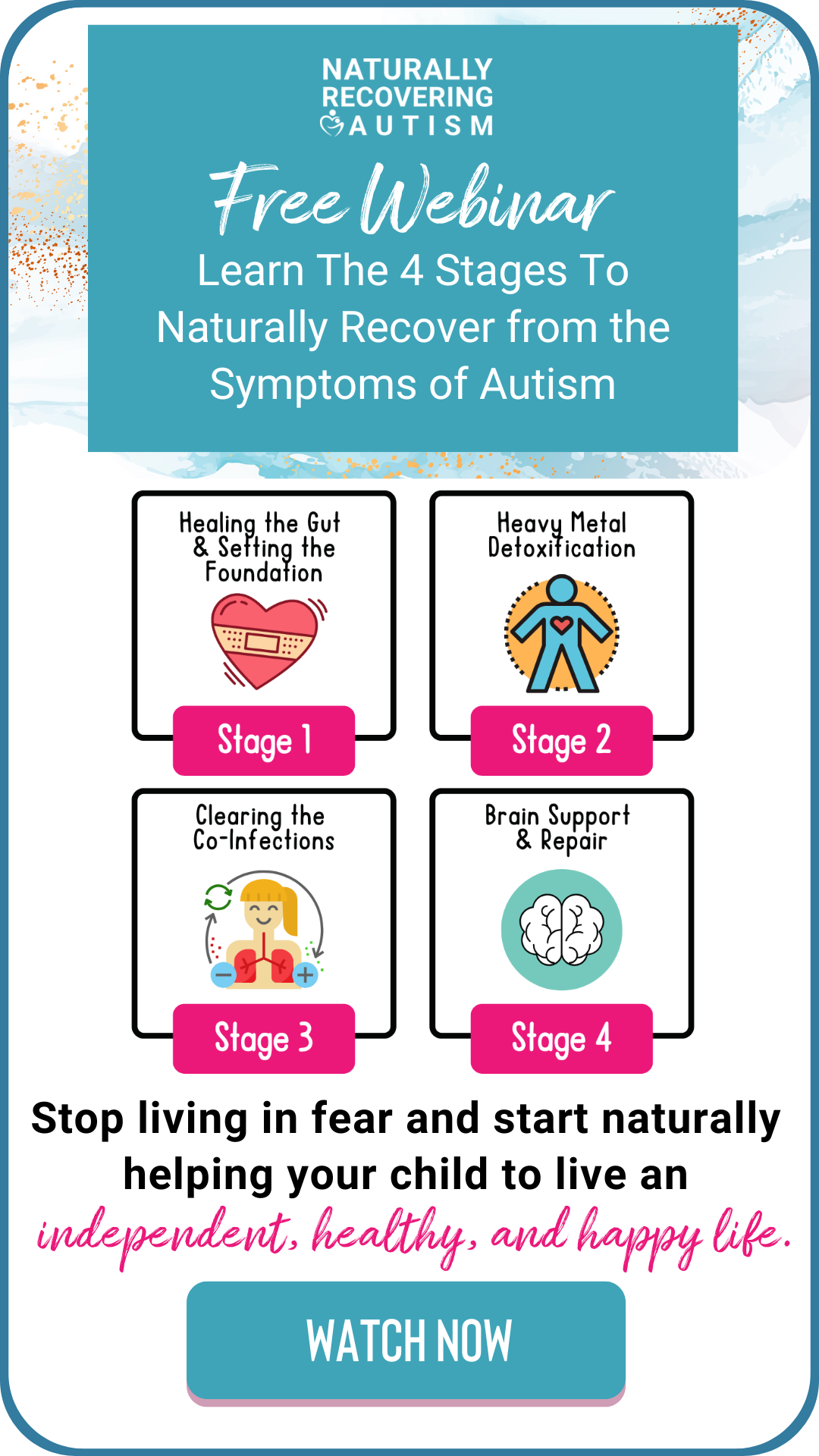
I’ll walk you through the four stages I believe are essential to supporting your child’s health:
- Healing the Gut
- Natural Heavy Metal Detoxification
- Clearing Co-Infections
- Brain Support & Repair
I’ll share what I discovered through my own journey, why I believe the order matters, and how I approach the underlying health challenges that can affect children with autism.
Stop guessing and start understanding the A-Z roadmap I developed through years of research and personal experience.
This is for informational purposes only and is not meant to diagnose or treat. Every child’s level of recovery is different. No two people are the same. It is never implied that all children will have the same outcome. Results are all based on individual biology and the work that is done. This process takes time and various steps, effort and resources need to be weighed. Our programs are intended to help you become more knowledgeable and guide you to help bring your child a better quality of life, whatever that may be. We want to help by giving great content, direction and strategies that move you forward. Nothing on this page or any of our websites is a promise or guarantee of results or future outcomes. The results on this page and any of our websites are not typical or promised. In fact, there will be people who purchase this and other programs and never put the work into implementing the strategies taught and therefore will achieve little to no results. Our more detailed earnings disclaimer, privacy policy, and terms and conditions for this program and website can be accessed via the links below. We hold ourselves (and you) to a high standard of integrity. We are cheering you on every step of the way.