The holidays are one of my favorite times to talk about food because so much of them revolves around gathering together, sharing a meal, and enjoying family traditions.
But if you’re parenting a child with autism who also has food sensitivities, allergies, digestive challenges, or very selective eating habits, planning that holiday meal may feel a little more complicated.
You may be wondering how to prepare traditional favorites without gluten, how to make healthier substitutions, or how to ensure your child has foods they can comfortably enjoy.
And maybe you’re concerned that if you change the recipes, the rest of the family won’t like them!
Well, I have some good news.
You don’t have to give up your favorite traditions to make delicious gluten-free foods.
Today, I’m sharing seven holiday recipe favorites that are simple, nourishing, and easy to adapt to your family’s needs.
The goal is to make holiday meals enjoyable, nutritious, and appropriate for your child’s individual needs. Modify recipes for your family, as needed.
1. Homemade Gluten-Free Holiday Stuffing
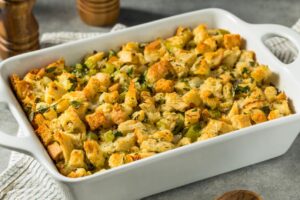
Enjoy a comforting holiday favorite made with homemade gluten-free coconut flour bread, fresh herbs, and wholesome ingredients. This healthier twist on traditional stuffing avoids refined flours, dairy, and added sugar while keeping the savory holiday flavors your family loves.
Traditional stuffing is usually made with wheat bread, but it’s easy to prepare a gluten-free version that still has those wonderful holiday flavors.
Part 1: Homemade Coconut Flour Bread
This bread is designed to be cubed and toasted for stuffing rather than eaten as a traditional sandwich loaf.
Ingredients
½ cup coconut flour
6 large eggs
½ cup unsweetened almond milk or water
¼ cup melted coconut oil or olive oil
1 teaspoon baking powder (gluten-free)
½ teaspoon sea salt
Instructions
- Preheat oven to 350°F. Line an 8 × 8-inch baking pan with parchment paper.
- Whisk the eggs, almond milk, and oil together.
- Add coconut flour, baking powder, and sea salt. Mix until smooth. Let the batter rest for 3–5 minutes to absorb the liquid.
- Spread evenly in the pan and bake for approximately 25–30 minutes, until the center is set and a toothpick comes out clean.
- Allow the bread to cool completely, then cut into ½- to ¾-inch cubes.
- Spread cubes on a baking sheet and toast at 300°F for 15–25 minutes, turning occasionally, until dry and lightly golden.
The bread will be more delicate than wheat bread, so handle the cubes gently.
Part 2: Thanksgiving herb stuffing
Ingredients
1 batch homemade coconut flour bread, cubed and toasted
2 tablespoons extra-virgin olive oil
1 medium onion, finely chopped
3 celery stalks, diced
3 garlic cloves, minced
1 tablespoon fresh sage, chopped (or 1 teaspoon dried)
1 teaspoon fresh thyme (or ½ teaspoon dried)
1 teaspoon fresh rosemary, finely chopped
½ teaspoon sea salt, or to taste
¼ teaspoon black pepper, optional
¾–1¼ cups chicken or vegetable broth, preferably homemade or without unnecessary additives
2 tablespoons fresh parsley, chopped
Instructions
Stir in garlic, sage, thyme, rosemary, salt, and pepper. Cook for another minute.
Place the toasted coconut flour bread cubes in a large bowl.
Add the cooked vegetables and herbs. Toss gently.
Slowly pour in ¾ cup broth, tossing carefully. Add more broth a little at a time until the stuffing is moist but not soggy.
Transfer to the baking dish and cover loosely.
Bake for 20 minutes, then uncover and bake another 10–15 minutes until lightly golden on top.
Garnish with fresh parsley and serve warm.
Helpful tip: Prepare the stuffing in its own baking dish rather than inside the turkey. This makes it easier to keep gluten-free and cook safely.
For a dairy-free version, use olive oil instead of butter, as this recipe does.
2. Holiday Cinnamon-Roasted Butternut Squash
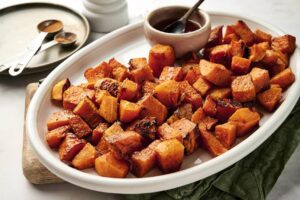
Butternut squash has approximately 50% fewer carbohydrates than baked sweet potatoes and about 60% fewer than boiled true yams, based on equal cooked weights.
It’s still a starchy vegetable, but a considerably lighter option.
Prep: 15 minutes · Cook: 25–35 minutes · Serves: 6
Ingredients:
1 medium butternut squash (approximately 2 pounds)
2 tablespoons extra-virgin olive oil or melted coconut oil
½ teaspoon ground cinnamon
¼ teaspoon sea salt
Pinch of ground nutmeg (optional)
Instructions
Preheat oven to 400°F. Line a baking sheet with parchment paper.
Peel the butternut squash, remove the seeds, and cut into 1-inch cubes.
Place squash in a large bowl and toss with olive oil or melted coconut oil, cinnamon, sea salt, and optional nutmeg.
Spread evenly on the baking sheet in a single layer.
Roast for 25–35 minutes, turning halfway through, until tender and lightly caramelized around the edges.
Serve warm.
Why it’s a healthier holiday alternative:
Butternut squash provides beta-carotene (which the body can convert to vitamin A), vitamin C, potassium, and fiber. Its natural sweetness becomes more pronounced when roasted, so there’s no need to add maple syrup, brown sugar, or other sweeteners.
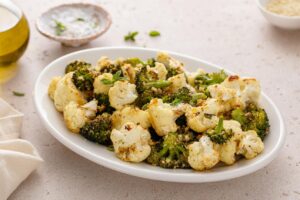
3. Holiday Garlic & Herb Roasted Broccoli and Cauliflower
Ingredients
1 large head broccoli, cut into flore
1 medium head cauliflower, cut into florets
3 tablespoons extra-virgin olive oil or avocado oil
3 cloves garlic, minced
1 teaspoon dried rosemary or 1 tablespoon fresh rosemary, finely chopped
1 teaspoon dried thyme
½ teaspoon sea salt, or to taste
¼ teaspoon freshly ground black pepper (optional)
¼ cup sliced almonds
1 tablespoon fresh lemon juice
2 tablespoons fresh parsley, chopped
Instructions
Preheat the oven to 425°F. Line a large baking sheet with parchment paper.
Prepare the vegetables. Wash and thoroughly dry the broccoli and cauliflower. Cut into similar-sized florets.
Optional holiday touch: Add a few tablespoons of fresh pomegranate seeds just before serving for beautiful red and green holiday colors. Pomegranate seeds add color and natural sweetness without added sugar.
This recipe is made with whole-food ingredients and avoids gluten, dairy, refined sugar, and heavy starches.
4. Homemade Gluten-Free Turkey Gravy
Makes approximately 2 cups
Gravy is one of those foods that can contain hidden gluten because wheat flour is commonly used as a thickener.
But making gluten-free gravy is surprisingly simple.
Ingredients
- 2 cups gluten-free turkey or chicken broth
- 2 tablespoons arrowroot powder (due to carbs content this is not to be used on a regular basis-just for occasions like this)
- 2 tablespoons cool water
- 1 tablespoon olive oil or turkey drippings
- Sea salt and pepper to taste
- Optional: a pinch of sage or thyme
Instructions
- In a saucepan, warm the broth and olive oil or turkey drippings over medium heat.
- In a small bowl, mix the arrowroot powder with cool water until smooth.
- Slowly whisk the arrowroot mixture into the warm broth.
- Continue stirring as the gravy gently simmers and thickens, approximately 1–3 minutes.
- Remove from heat once the desired consistency is reached.
- Season with salt, pepper, and herbs.
Helpful tip: Check the label on your broth to make sure it’s gluten-free. Arrowroot works best when you avoid prolonged boiling after the gravy thickens.
5. Gluten-Free Pumpkin Bread
Coconut flour is tasty, nutritious and low in carbohydrates. It is one of my personal favorites. There are many gluten free websites for recipes using coconut flour. The book, Cooking With Coconut Flour, by Bruce Fife, has a fabulous recipe for pumpkin bread made with coconut flour:
- 1/2 cup canned pumpkin
- 8 eggs
- 1/2 cup coconut oil or butter, melted
- 1/2 cup monkfruit
- 1 tsp. vanilla
- 1 1/2 tsp. ground cinnamon
- 1/2 tsp ground mace
- 1/2 tsp salt
- 3/4 cup sifted coconut flour
- 1 tsp baking powder (aluminum free)
- 1/2 cup pecans
Blend pumpkin, eggs, oil sugar, vanilla, cinnamon, mace, and salt. combine coconut flour with baking powder and mix thoroughly into batter. Fold in nuts. Pour into a 9x5x3 inch loaf pan lined with parchment paper or lightly greased with coconut oil or butter, and bake at 350 degrees F (175 C) for 60 minutes.
Helpful tip: These muffins freeze well, so you can prepare them ahead of time.
6. Easy Gluten-Free Baked Apples
Serves approximately 6–8
And of course, we can’t talk about Thanksgiving without including dessert!
These baked apples are a wonderful alternative to traditional apple pie, and you don’t need to make a complicated gluten-free pie crust.
Ingredients
For the apple filling:
- 5 medium apples, peeled and sliced
- 1 teaspoon lemon juice
- 1 teaspoon cinnamon
- 1 tablespoon pure maple syrup or organic honey
Instructions
- Preheat the oven to 350°F.
- Lightly grease an 8-by-8-inch baking dish with a little butter.
- In a large bowl, combine all ingredients
- Spread the apple mixture evenly in the baking dish.
- Bake for approximately 35–45 minutes, until the apples are tender and the topping is golden.
- Allow to cool slightly before serving.
7. Garlic & Herb Cauliflower Mash
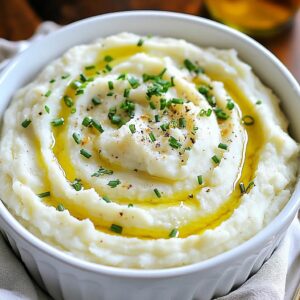
Since you’re trying to avoid high-starch vegetables, refined carbohydrates, dairy, and added sugars, I would suggest adding Garlic & Herb Cauliflower Mash in place of the Yukon Gold mashed potatoes.
It’s a wonderful holiday side dish that gives families the creamy, comforting texture of mashed potatoes without the high starch content.
Prep: 10 minutes · Cook: 15 minutes · Serves: 6
Ingredients
1 large head cauliflower, cut into florets
2 tablespoons extra-virgin olive oil
2–3 cloves garlic, minced
½ teaspoon sea salt, or to taste
¼ teaspoon black pepper (optional)
1 teaspoon fresh rosemary or thyme, finely chopped
1–2 tablespoons unsweetened almond milk or coconut milk, only if needed
1 tablespoon fresh parsley, chopped, for garnish
Instructions
Steam the cauliflower. Place florets in a steamer basket over boiling water. Cover and steam for 10–12 minutes, until very tender.
Sauté the garlic. Heat olive oil in a small skillet over low heat. Add minced garlic and cook for 1–2 minutes until fragrant, without browning.
Remove excess moisture. Drain the cauliflower thoroughly and let it sit for a minute or two so excess steam escapes. This helps prevent watery mashed cauliflower.
Blend until creamy. Place cauliflower, garlic-infused olive oil, salt, pepper, and herbs into a food processor. Blend until smooth. Add a little unsweetened almond or coconut milk only if necessary.
Serve warm. Transfer to a serving bowl and garnish with fresh parsley.
Why this is a great alternative
Cauliflower contains only about 5 grams of total carbohydrates per 100 grams, compared with approximately 20 grams in cooked potatoes. It’s also a cruciferous vegetable that provides fiber, vitamin C, and beneficial plant compounds.
It makes an excellent holiday substitute for traditional mashed potatoes without sacrificing the comforting texture families enjoy.
A Few Additional Tips for Healthier Holidays
As you plan your holiday meal, remember that making a few thoughtful substitutions can go a long way.
You don’t need to change every family recipe.
Maybe you start by making the stuffing gluten-free, or preparing a homemade dessert with ingredients you recognize.
If your child has celiac disease or a food allergy, be particularly careful about shared utensils, cutting boards, serving spoons, and preparation surfaces.
Cross-contact can make an otherwise suitable dish unsafe for someone with a medical dietary restriction.
And if your child has sensory-related food preferences, remember that it’s perfectly okay to serve familiar foods alongside your holiday favorites.
Holiday meals should be about enjoying time together, not creating pressure around food.
Make This Holiday Enjoyable for Everyone
One of the things I want you to remember is that healthy holiday eating doesn’t have to be complicated.
You can enjoy traditional holiday flavors while making adjustments that fit your family’s needs.
And you don’t need to prepare seven new recipes all at once.
Choose one or two that sound good to you, try them ahead of time, and see what your family enjoys.
Sometimes the simplest changes are the ones that become your favorite new traditions.
Most importantly, enjoy the time with your family.
The holidays are about connection, gratitude, and making memories.
And a little preparation can help make the season easier and more enjoyable for everyone.
Remember the Bigger Picture
If you’ve been following my recent episodes, you know we’ve been discussing immune health, nutrition, gut health, and the different ways everyday habits can influence your child’s well-being.
Food is just one part of that bigger picture.
And sometimes, knowing which changes to make—and in what order—can feel overwhelming.
That’s why I created my four-stage, A-to-Z roadmap inside the Naturally Recovering Autism Membership Program.
I wanted parents to have a clear educational framework for understanding nutrition, digestive health, environmental concerns, additional health challenges, and ways to support brain health and development.
Through my membership, I guide parents through these four stages, providing ongoing education, step-by-step resources, and support to help them confidently navigate their child’s health journey.
If this is something you’d like to learn more about, then please access my free workshop where I walk you through my 4-stages for optimum results, how I can guide you through the steps in the membership program, and invite you to join now.
WATCH FREE WORKSHOP NOW
A few additional holiday episodes:
Autism and Holiday Foods: What Parents Should Watch For [Podcast Episode #258]
Autism and Immune Health: 7 Natural Ways to Support Your Child [Podcast Episode #257]
Halloween Candy and Autism: Healthier Choices for Your Child [Podcast Episode #256]
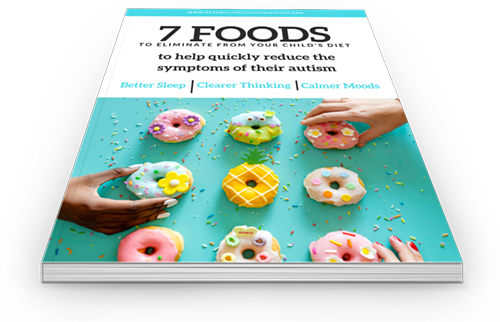
Get Your Free Food Guide!

Quickly Reduce Your Child’s Symptoms of Autism by Eliminating 7 Foods Most People Consume Daily!
The first crucial step of autism recovery is to begin restoring health to the gut and the immune system.
The health of the gut is directly linked to the health of the brain and therefore to the symptoms of autism. In fact, 80% of the immune system comes from the gut so if the gut is not healthy, then the brain can’t thrive, and the immune system is compromised. It’s a vicious cycle, but thankfully, it’s one that we can put an end to by first eliminating harmful foods.
- Harmful Foods: Identify the foods that worsen autism symptoms and understand the science behind their impact.
- Smart Food Choices: Learn about easy dietary swaps that can significantly enhance sleep, clarity of thought, and emotional well-being.
- Practical Implementation: Get valuable tips on how to implement these dietary changes easily and effectively.
This is for informational purposes only and is not meant to diagnose or treat. Every child’s level of recovery is different. No two people are the same. It is never implied that all children will have the same outcome. Results are all based on individual biology and the work that is done. This process takes time and various steps, effort and resources need to be weighed. Our programs are intended to help you become more knowledgeable and guide you to help bring your child a better quality of life, whatever that may be. We want to help by giving great content, direction and strategies that move you forward. Nothing on this page or any of our websites is a promise or guarantee of results or future outcomes. The results on this page and any of our websites are not typical or promised. In fact, there will be people who purchase this and other programs and never put the work into implementing the strategies taught and therefore will achieve little to no results. Our more detailed earnings disclaimer, privacy policy, and terms and conditions for this program and website can be accessed via the links below. We hold ourselves (and you) to a high standard of integrity. We are cheering you on every step of the way.