When someone is looking for answers in autism—especially when they have been struggling for a long time—it is very understandable to ask:
“What is the one thing that will help?”
Is it a supplement?
A dietary change?
A therapy?
A health technology?
Something else?
After decades of working with families and individuals, one thing I have learned is that I don’t look for one magic solution.
I look at the whole picture.
That doesn’t mean throwing everything at someone at once. In fact, I believe the opposite approach is often more helpful.
It means understanding that different tools can have different purposes—and knowing how to put the right pieces together in a thoughtful way.
Start With the Bigger Picture
The first thing I want to understand is not simply, “What symptom are we trying to change?”
I want to understand the person.
What is going on with their nutrition? How are they sleeping? How is digestion? What does their environment look like? What has already been tried? What seems to help? What seems to make things worse?
Symptoms are important, but they are also information.
They can give us clues about where additional support may be needed.
Build the Foundation First
Before adding more and more interventions, I want to make sure the foundational pieces are being addressed.
That may include things like nutrition, hydration, sleep, digestion, reducing unnecessary environmental stressors, and providing the body with the basic resources it needs.
The foundation matters because you don’t want to keep adding more tools while overlooking something fundamental.
Then Ask: What Needs Support Right Now?
Once I have a better understanding of the bigger picture, I can begin looking at which areas may need additional support.
And this is where I believe individualized thinking becomes so important.
There isn’t necessarily one supplement that everyone needs.
There isn’t one diet that works exactly the same way for everyone.
And there isn’t one technology or therapy that should automatically be added simply because it worked for someone else.
Instead, I ask:
What is the goal?
What are we trying to support?
What is the most appropriate tool for this particular situation?
Different Tools Can Have Different Jobs
This is also why I don’t see supplements, nutrition, therapies, and health technologies as necessarily competing with one another.
They can serve very different purposes.
One approach may be focused on providing nutritional support. Another may be focused on supporting a particular body system. Another may be something I use as an additional wellness tool.
The question isn’t, “Which one is best?”
The question is:
“What role does this particular tool have in the bigger picture?”
That is one of the most important questions I ask before I introduce anything.
I Don’t Change Everything at Once
Another important part of putting the pieces together is being thoughtful about timing.
If you change ten things at once, how do you know what made a difference?
Instead, whenever appropriate, I prefer to introduce changes thoughtfully, pay attention to what is happening, and then reassess.
That allows us to learn from the process.
We’re not simply adding things.
We’re paying attention.
Observe. Reassess. Adjust.
This may be one of the biggest differences between simply following a list and taking an individualized approach.
You don’t just create a plan and walk away from it.
You observe what is happening.
You reassess.
And you adjust when necessary.
Because the person in front of you is not a textbook—and their needs may change over time.
It’s About Putting the Right Pieces Together
So when someone asks me, “What do you recommend?” my answer isn’t always a single product, supplement, diet, or technology.
My approach is to step back and ask:
What does this person need?
What should come first?
What are the foundational pieces?
Where could additional support be helpful?
And how can we put those pieces together in a thoughtful, individualized way?
That’s the bigger picture.
I’m not looking for one perfect tool.
I’m looking for the right combination of support, at the right time, for the individual.
And that is ultimately how I approach the work I do with families and individuals: look at the whole picture, understand the role of each piece, and then put those pieces together intentionally.
Free Online Event
The 4 Stage
Autism Recovery Reset
How You, as a Parent, Can Take Action Now
With an A-Z, Step-By-Step Roadmap!
1-HOUR LIVE EVENT + Q&A
THURSDAY, OCTOBER 22ND, AT 5PM PT | 8PM ET
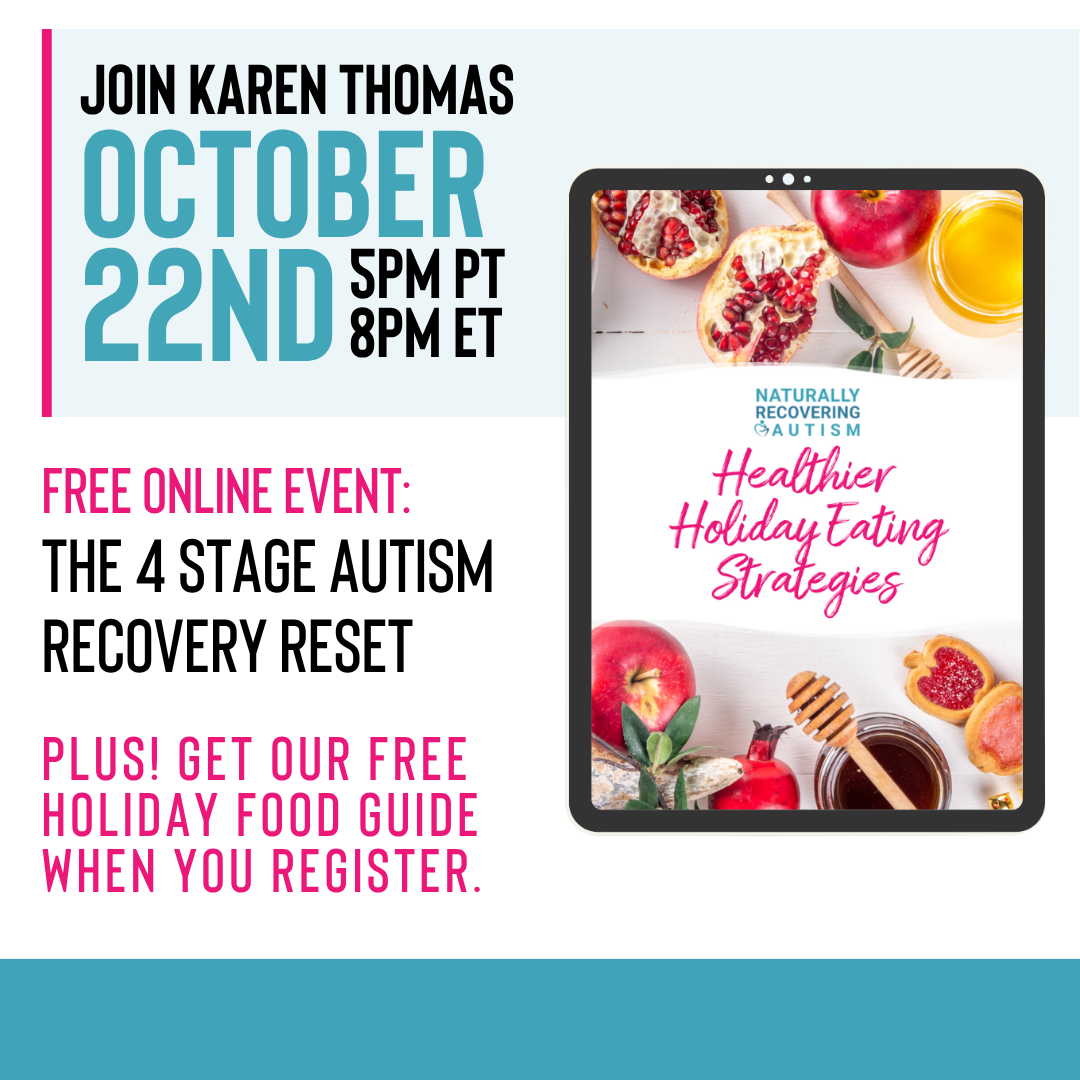
If the time doesn't work for you, sign up anyway, and I'll send you the replay.
After watching my own son transform from struggling with severe symptoms to living a healthy, independent life, I spent years researching, learning, and developing the approach I now teach to families around the world.
In this free live online event, I will teach you what most doctors don’t even know is absolutely necessary to achieve your child’s optimal outcome to ensure their healthiest, happiest, and most fulfilling life.
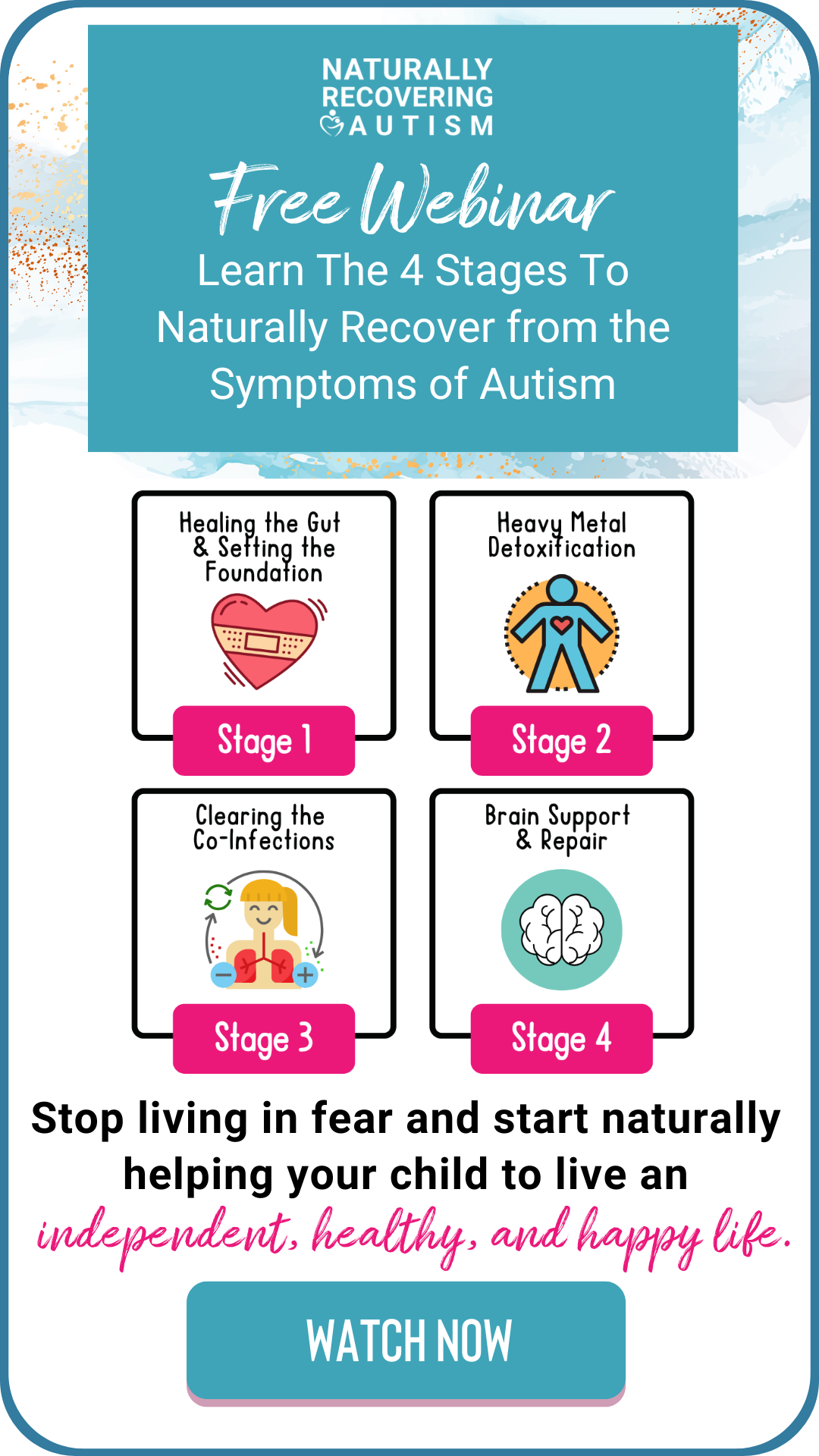
I’ll walk you through the four stages I believe are essential to supporting your child’s health:
- Healing the Gut
- Natural Heavy Metal Detoxification
- Clearing Co-Infections
- Brain Support & Repair
I’ll share what I discovered through my own journey, why I believe the order matters, and how I approach the underlying health challenges that can affect children with autism.
Stop guessing and start understanding the A-Z roadmap I developed through years of research and personal experience.
This is for informational purposes only and is not meant to diagnose or treat. Every child’s level of recovery is different. No two people are the same. It is never implied that all children will have the same outcome. Results are all based on individual biology and the work that is done. This process takes time and various steps, effort and resources need to be weighed. Our programs are intended to help you become more knowledgeable and guide you to help bring your child a better quality of life, whatever that may be. We want to help by giving great content, direction and strategies that move you forward. Nothing on this page or any of our websites is a promise or guarantee of results or future outcomes. The results on this page and any of our websites are not typical or promised. In fact, there will be people who purchase this and other programs and never put the work into implementing the strategies taught and therefore will achieve little to no results. Our more detailed earnings disclaimer, privacy policy, and terms and conditions for this program and website can be accessed via the links below. We hold ourselves (and you) to a high standard of integrity. We are cheering you on every step of the way.